The Garden Belongs to the House: A Guide to Historic Garden Styles & What Grew There
The Lantern and Oak
Stories of Home. Timeless Living.
The Journal of Melissa LaRosa Interiors
Every home has a story. This is where we come to tell them.

There is something slightly unsettling about seeing a beautifully preserved old house surrounded by landscaping that feels as though it arrived last Tuesday.
The architecture may have stood for 150 years, but outside are perfectly spaced shrubs, a few obligatory ornamental grasses and beds that could belong to almost any new construction home in America.
Nothing is necessarily wrong.
But something doesn't quite belong.
I've been thinking more and more about gardens as I study historic homes because the landscape surrounding an old house is not simply decoration.
It is another room in the story of the home.
Just as architectural styles changed over time, gardens evolved too. What surrounded an eighteenth-century Colonial home wasn't necessarily what you would have found outside a Victorian house generations later.
And the plants themselves can tell us quite a bit.
So today, we're going outside.
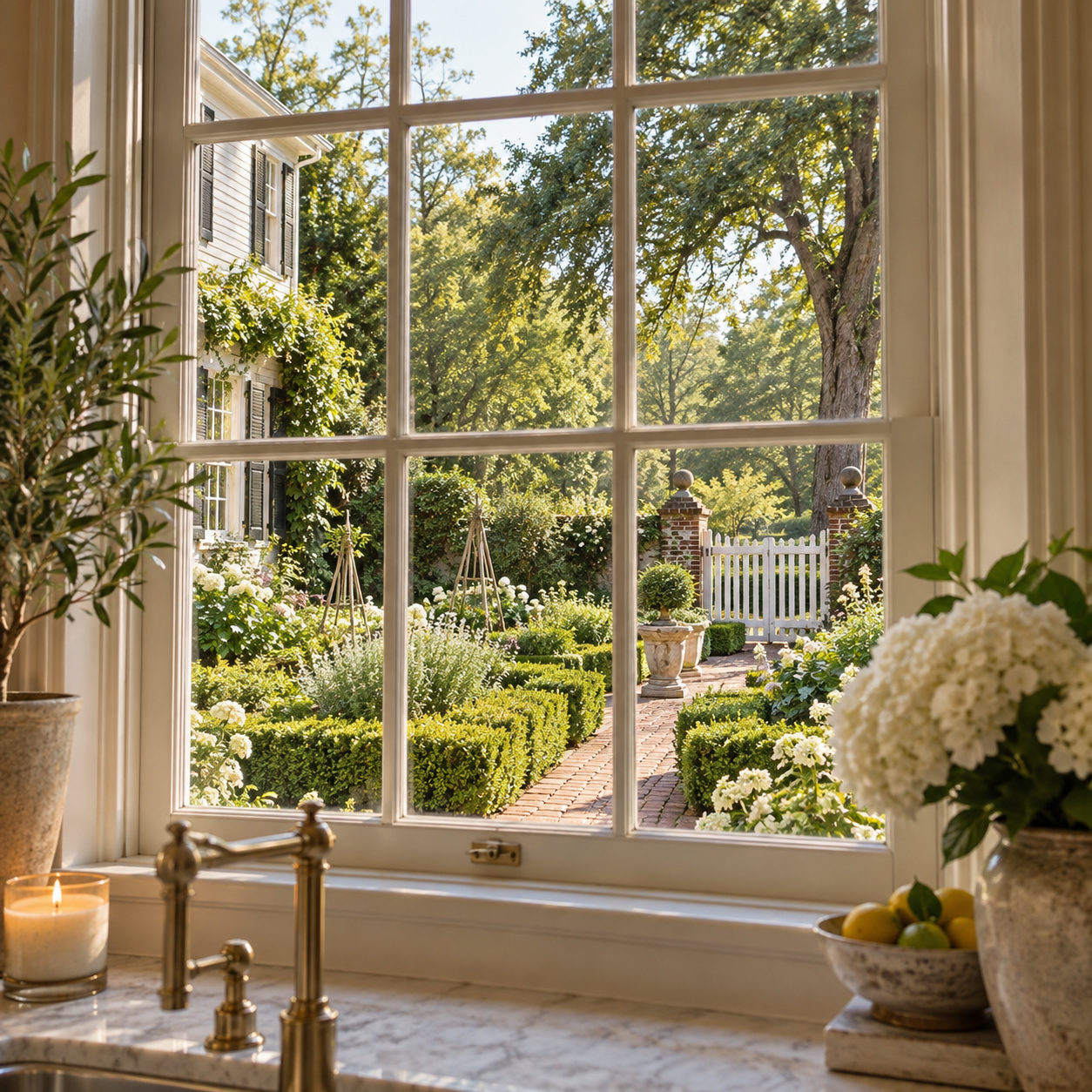
The Colonial Garden: Beautiful, Ordered—and Useful
When we imagine an early American garden, it's tempting to picture an elaborate ornamental landscape.
In reality, gardens had work to do.
Herbs, vegetables, fruit and flowers could share the same garden. Plants were grown for cooking, medicinal uses, dyes, fragrance and beauty. The National Park Service documents culinary herbs including rosemary, thyme, basil, chives, mint and sage, along with flowers such as roses, lilies and sunflowers in colonial gardens.
The layout, however, often brought order to all that usefulness.
Think geometric beds, defined pathways, enclosure and symmetry rather than loose contemporary landscaping.
At the reconstructed eighteenth-century garden at Salem Maritime, for example, formal beds are edged with hedging and divided by gravel walks, while flowers, herbs and vegetables grow together. Fruit trees form an orchard beyond the beds, with a grape arbor at the rear.
Plants you might associate with this tradition:
Rosemary • thyme • sage • mint • chives • basil • roses • lilies • sunflowers • fruit trees • grapevines
And, particularly in later Southern interpretations, boxwood became an important structural plant.
What I love about this garden is that beauty wasn't separated from usefulness.
The herbs you needed for supper could also make the garden smell wonderful.
The fruit tree was productive and beautiful.
That feels like a lesson worth bringing into our homes today.
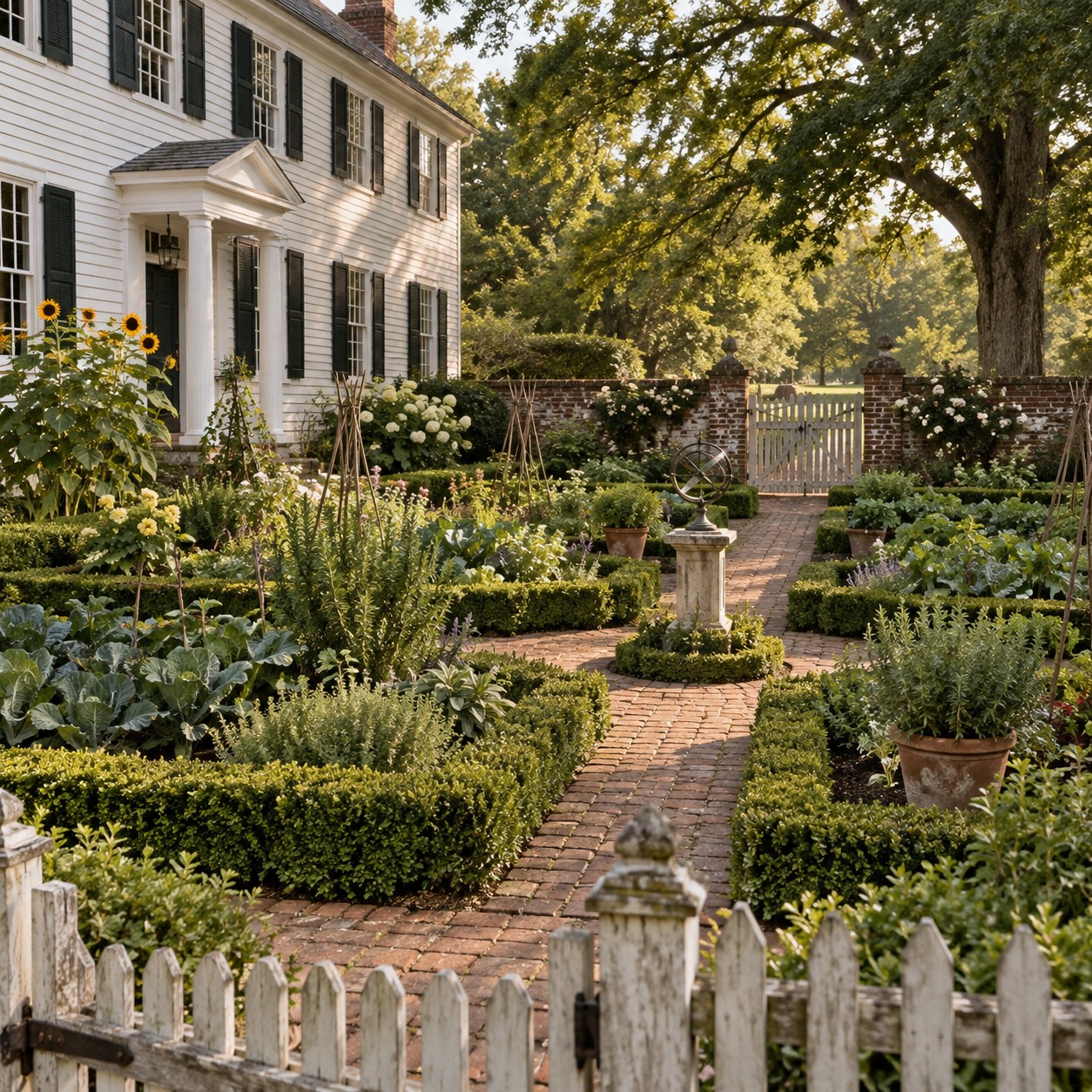
The Colonial Garden
Beautiful by design, useful by nature.
Colonial gardens blended orderly paths and clipped borders with herbs, vegetables, flowers, and medicinal plants—creating outdoor spaces as practical as they were beautiful.
The Colonial Revival Garden: Our Romantic Idea of the Past
Here's where historic gardens become particularly interesting.
What many of us picture as a quintessential "Colonial garden" may actually owe quite a bit to the Colonial Revival movement that came much later.
Colonial Revival gardens looked backward and interpreted earlier American garden traditions through a more romantic lens. At George Washington Birthplace, for example, a Colonial Revival garden developed in the twentieth century with geometric organization, brick walks, boxwoods and historically inspired plantings.
This is an important distinction when restoring a historic property.
Something can look convincingly old without actually dating to the original period of the house.
And that doesn't necessarily make it wrong.
It simply means we should understand which chapter of history we're preserving.
Look for:
Boxwood-edged beds • brick or gravel paths • roses • old-fashioned flowers • herbs • structured geometry • pergolas • sundials
At the Longfellow property, the early-twentieth-century Colonial Revival garden used boxwood parterres, fencing, gates and a pergola to create what was essentially an outdoor room.
That phrase—outdoor room—may be my favorite way to think about it.
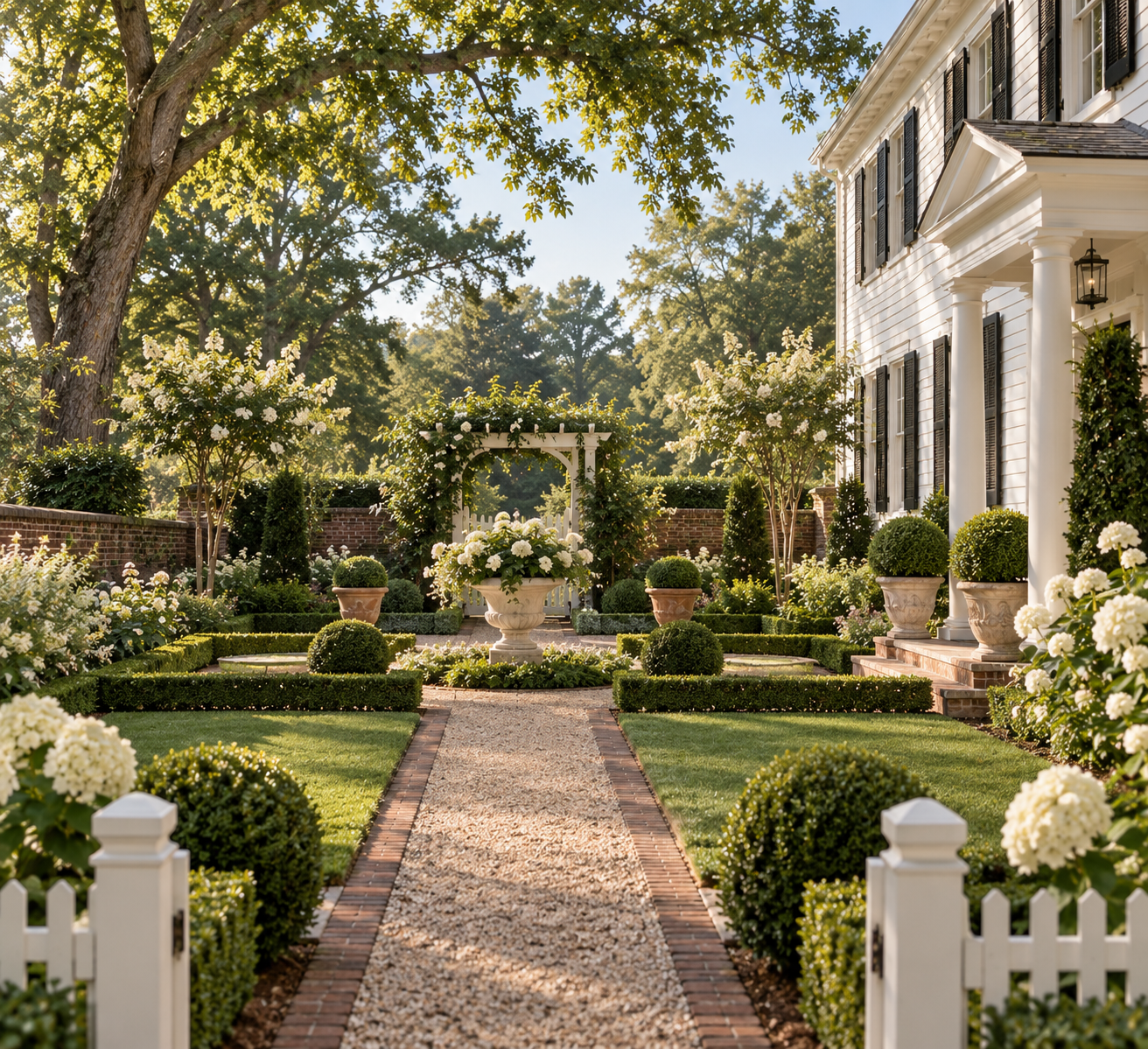
A Little Garden History
Colonial Revival gardens became especially popular in the late 19th and early 20th centuries, when Americans looked back to the Colonial era for inspiration. Their clipped hedges, brick paths, symmetrical beds, and traditional plantings were often romanticized interpretations of early American gardens rather than exact recreations.
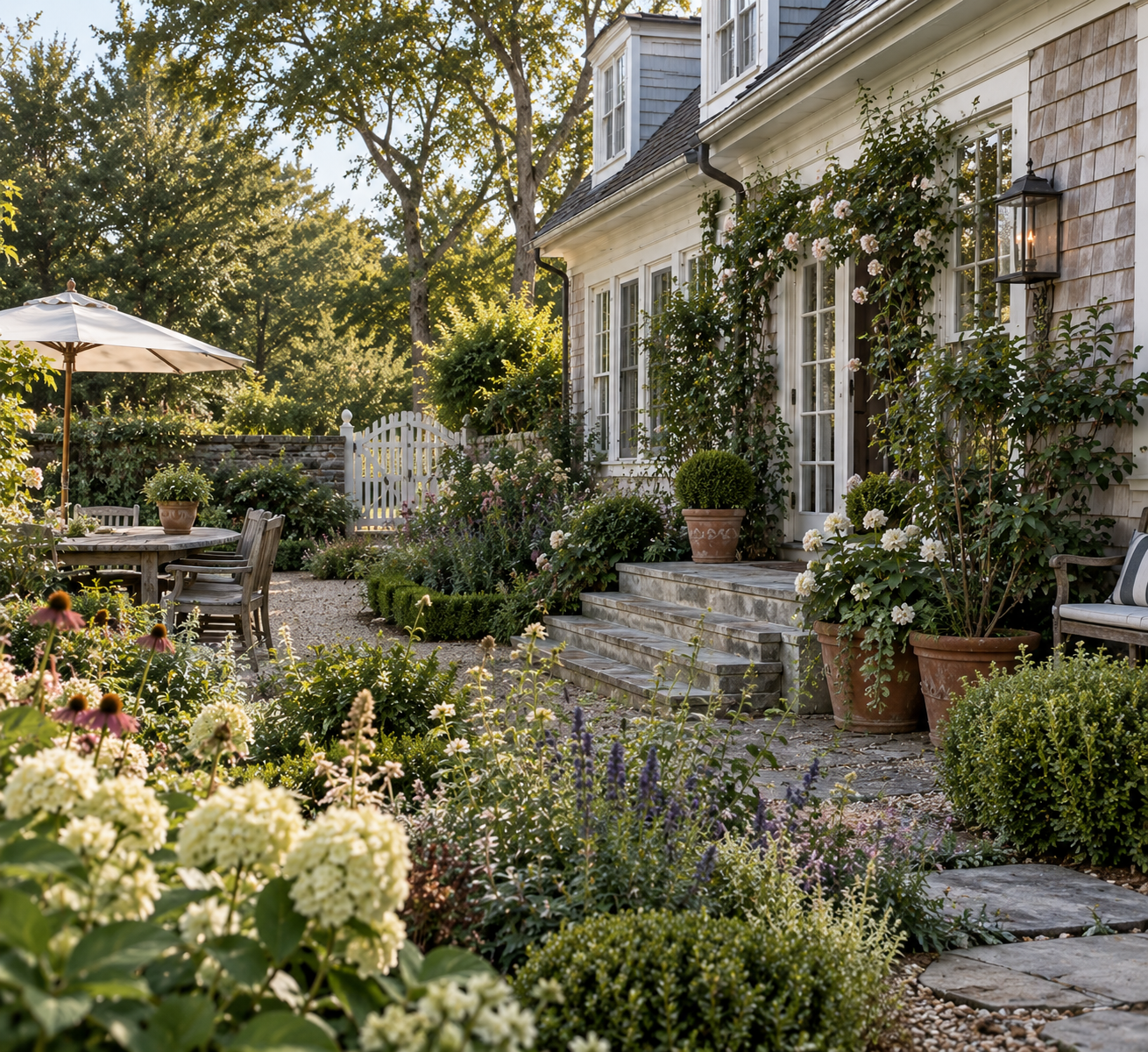
The Cottage Garden: Beautifully Undone
And then we arrive at a garden style that almost seems to resist being designed.
The cottage garden.
This is where I want the roses spilling a little farther than planned.
Something climbing the fence.
Herbs tucked between flowers.
Plants brushing against the walkway.
The cottage garden should feel abundant rather than manicured.
Think:
Climbing roses • lavender • foxglove • hollyhocks • delphinium • daisies • herbs • flowering vines
But there's an important lesson here too.
A garden that looks effortless usually isn't.
There is structure beneath all that romance—paths, boundaries, repetition and carefully considered plant heights keep abundance from becoming chaos.
That's very similar to a collected interior.
The goal isn't randomness.
It's structure you don't immediately notice.
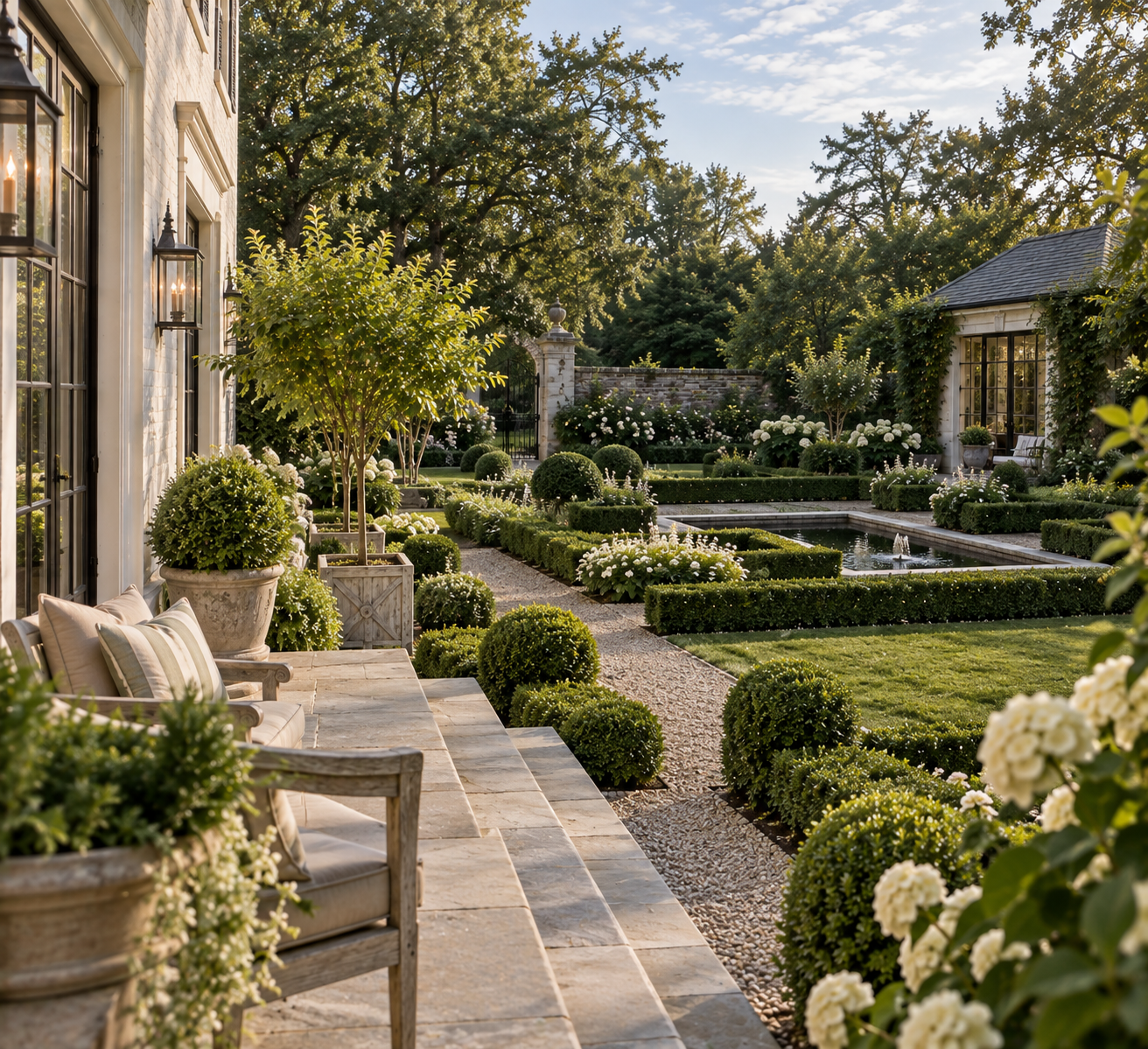
The Formal Garden: Architecture Continued Outdoors
Formal gardens speak the same language I use constantly in interior design:
axis, proportion, repetition and symmetry.
The architecture doesn't stop at the back door.
A doorway may establish the centerline of a path.
Windows can influence the arrangement of planting beds.
The dimensions of the house can even inform the geometry of the landscape.
At Hampton National Historic Site, for example, the dimensions and balanced organization of the formal gardens intentionally echoed the architectural qualities of the mansion itself.
Plants and elements might include:
Boxwood • clipped evergreens • roses • flowering perennials • specimen trees • hedges • parterres • gravel paths • fountains or sundials
The plants matter.
But in a formal garden, the spaces between the plants matter just as much.
Did you know?
Formal gardens were designed almost like rooms in a house. Hedges became the “walls,” paths acted as hallways, and fountains or statues served as focal points—allowing the architecture of the home to continue into the landscape.
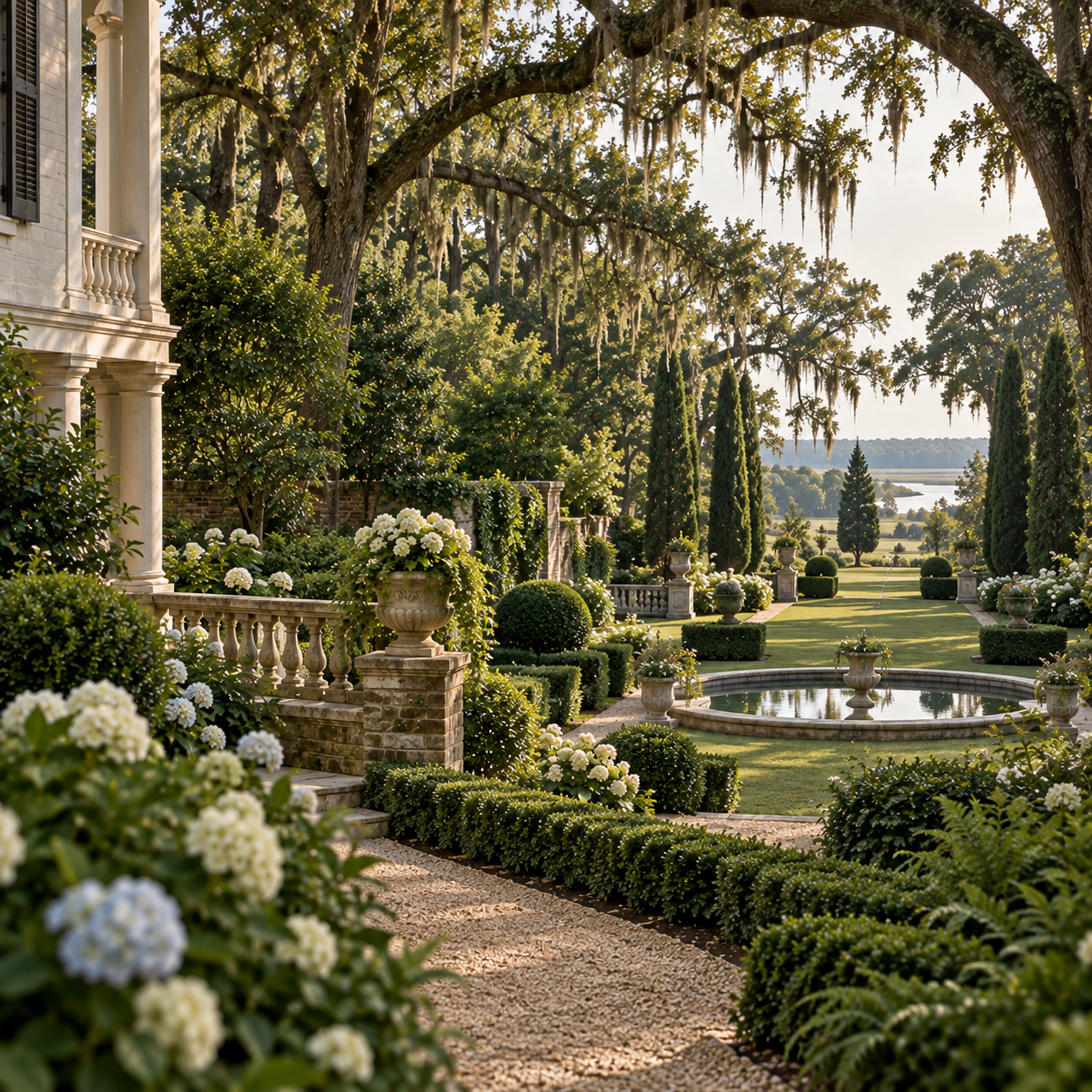
The Estate Garden: When the Landscape Becomes a Journey
Larger historic properties often tell a different story.
Here, the landscape isn't necessarily something you see all at once.
You experience it.
A formal garden near the house may gradually give way to specimen trees, lawns, orchards, woodland or more picturesque landscapes.
At the Vanderbilt Mansion property in Hyde Park, mature specimen trees helped preserve the picturesque character of the estate landscape even as later owners altered formal portions of the gardens.
That layering fascinates me because it reminds us that historic properties rarely belong to a single moment.
Landscapes evolve just like houses do.
One generation plants the tree.
Another builds the pergola beneath it.
Another changes the flower beds.
And eventually, all of those decisions become history.
So Which Garden Belongs With Your Historic House?
This is where I would resist the urge to simply choose the garden style you like best.
Instead, begin exactly where I would begin inside the house:
with research.
When was the house built?
What architectural style is it?
Where is it located?
Are there old photographs of the property?
Do maps, inventories or family records tell us anything about its landscape?
Are any mature trees or plantings potentially part of an earlier design?
And perhaps most importantly:
What period are we trying to preserve?
A garden doesn't necessarily need to become a museum.
Neither does the house.
Modern families need outdoor dining areas, pools, children's spaces and landscapes that can realistically be maintained.
But those things can still be introduced with respect for what came before.
A brick path instead of concrete.
A hedge establishing an old axis.
An herb garden near the kitchen.
A climbing rose softening an outbuilding.
A magnificent old tree allowed to remain the most important thing in the yard.
Because restoring an old house shouldn't end at the porch steps.
Sometimes the garden is where the story was waiting all along.
May your home always be a place where stories are gathered, seasons are celebrated and the porch light is left on a little longer.
— Melissa LaRosa
The Lantern and Oak