The Detail You Can’t Buy
ARTICLE 0005
The Lantern and Oak
Stories of Home. Timeless Living.
The Journal of Melissa LaRosa Interiors
Every home has a story. This is where we come to tell them.

Why some homes have atmosphere—and others simply have beautiful things
I can usually tell within the first few minutes of walking into a house whether it has it.
Not style.
Not money.
Not even particularly good decorating.
Atmosphere.
It is one of the hardest things to photograph and one of the easiest things to feel.
You know the kind of house I mean.
You walk through the door and instinctively lower your shoulders.
The lighting is softer.
Nothing seems to be trying particularly hard to impress you, and yet you find yourself looking around.
There is a lamp glowing in a corner that could have easily been left dark.
A chair has been turned slightly toward another instead of perfectly squared to the room.
Books look as though someone actually reads them.
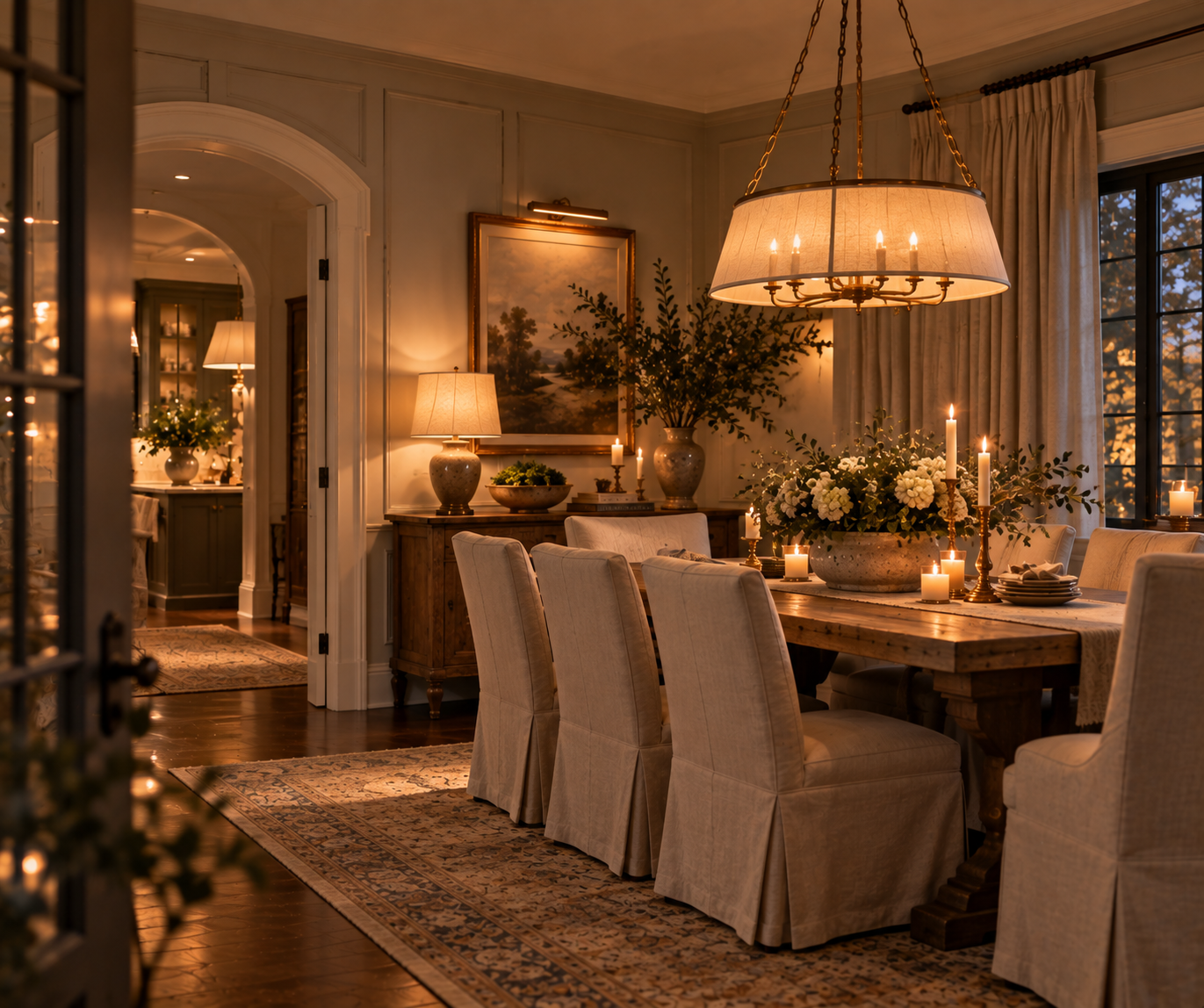
The dining table seems ready for something to happen.
And somehow the entire house quietly says:
Stay awhile.
As a designer, I find myself increasingly interested in this.
Because we have never had more access to beautiful things.
We can see thousands of perfectly designed rooms before breakfast.
We can identify the exact chair, rug, light fixture and paint color in a photograph and have nearly all of it delivered to our doorstep.
So why can't we order the feeling, too?
Because atmosphere isn't a product.
It is a thousand small decisions about how a home will be experienced.

The Most Expensive Thing in a Room Isn't Always the Most Important
There is an interesting exercise I sometimes do mentally when I look at a room.
I take away the furniture.
Then the rug.
Then the art.
Then all the decorative objects.
What's left?
The windows.
The doors.
The ceiling height.
The passage into the next room.
The direction of the sunlight.
The architecture.
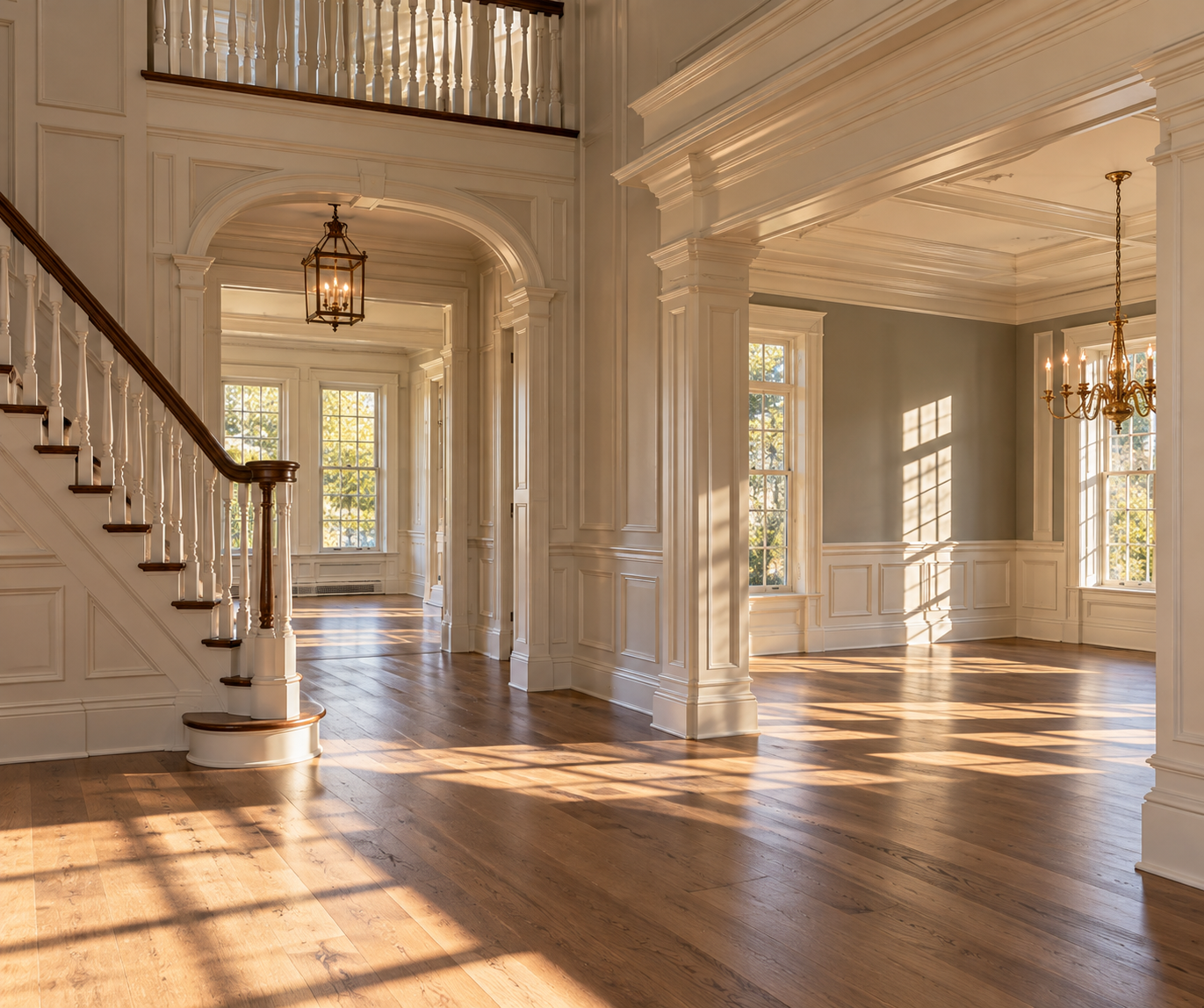
This is one of the great lessons historic houses teach us.
Before a single piece of furniture enters the room, the house is already participating in the design.
A deep windowsill creates a place to pause.
A cased opening makes the transition between two rooms feel intentional.
Millwork creates shadow.
An old wood floor brings movement and variation.
A window placed at the end of a hallway pulls your eye toward the light.
None of these things shout for attention.
But together, they create atmosphere.
And we can learn from them even if our homes were built five years ago instead of one hundred and fifty.
Beautiful Rooms Need Shadows
Somewhere along the way, we became a little afraid of darkness in our homes.
We added recessed lights everywhere.
We made every corner equally bright.
We chose enormous open spaces and removed walls so light could reach everything.
And yes, natural light is wonderful.
But a room without shadow can feel surprisingly flat.
Think about an old library in the evening.
A restaurant you never want to leave.
A historic hotel lobby.
Very often, the magic comes from contrast.
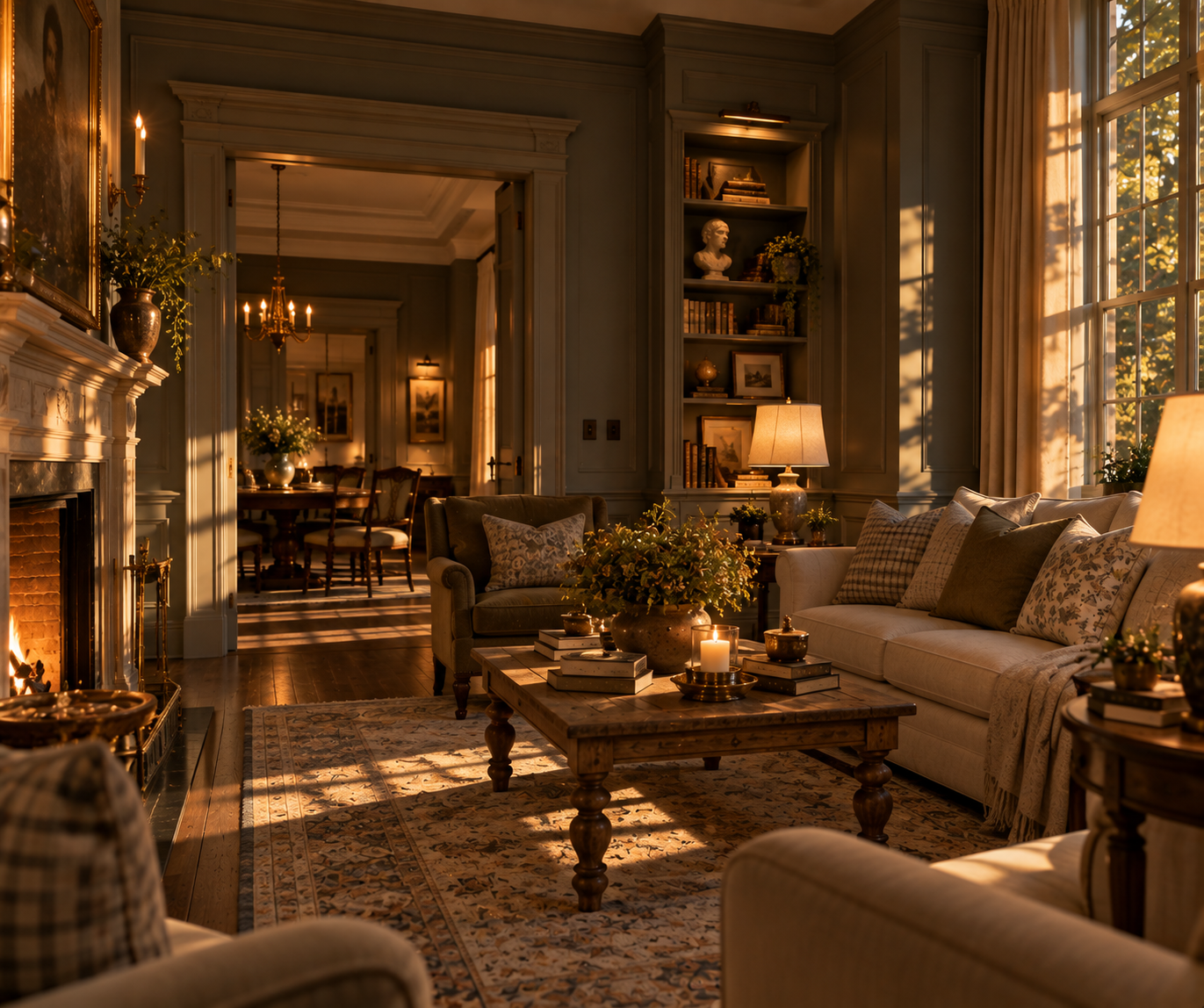
A pool of lamplight beside a chair.
A darker corner beyond it.
Candlelight moving across a table.
Late afternoon sun reaching only part of a room.
Your eye needs somewhere to rest.
This is why I will almost always choose several smaller sources of light over one ceiling fixture flooding an entire room.
Atmosphere lives in layers.
A Room Should Suggest What Happens There
This may be my favorite part of designing a home.
A room should give you a little invitation.
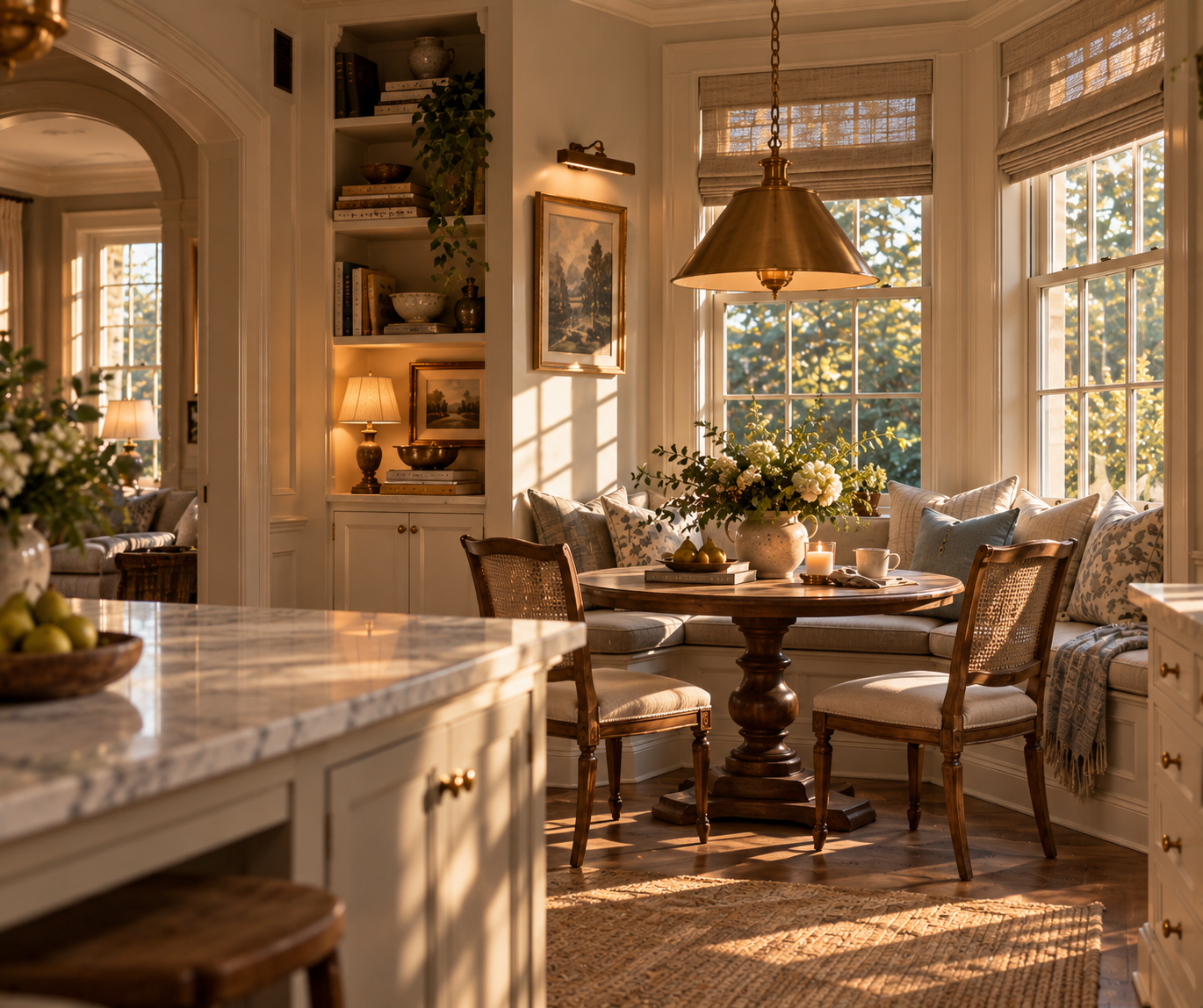
A chair near a window says sit here in the morning.
Two chairs angled toward one another say talk.
A table beneath a beautiful light fixture says gather.
A small lamp beside a stack of books says stay up a little later.
A bench near the door says take your time.
Those decisions may look insignificant on a floor plan.
They aren't.
They influence behavior.
And when a room isn't working, sometimes the problem isn't that it needs something new.
Sometimes the room simply isn't telling anyone what to do there.
Perfection Can Actually Work Against Us
This is where design becomes a little counterintuitive.
We spend so much time trying to make rooms look finished that occasionally we finish the life right out of them.
Everything is centered.
Everything coordinates.
Every surface has exactly three decorative objects.
Nothing is out of place.
It photographs beautifully.
And yet you don't particularly want to sit down.
The rooms I find most compelling usually contain something that breaks the perfection.
An antique piece with a little wear.
Books stacked where they're actually used.
A piece of art that means something to the homeowner even though it isn't the predictable choice.
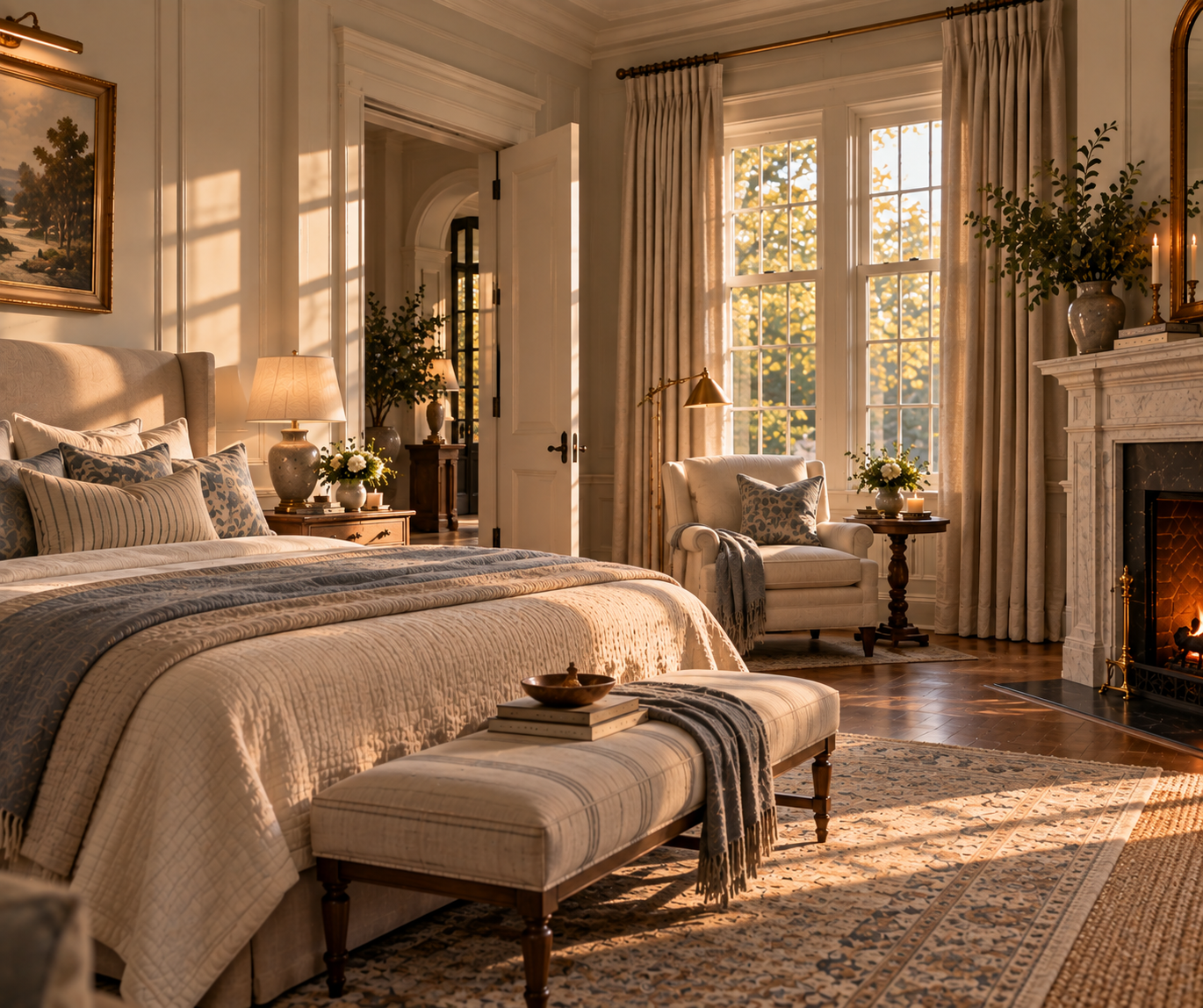
A chair pulled closer to the fireplace.
Something slightly unexpected.
Historic houses are particularly good at this because age naturally introduces irregularity.
Floors aren't perfectly uniform.
Walls may not be perfectly straight.
Wood changes with time.
Materials develop patina.
The house stops looking manufactured and starts looking individual.
I don't think we should artificially age our homes.
But I do think we should stop being afraid of letting them become ours.
Leave Something for the Eye to Discover
One of the quickest ways to make a home feel less interesting is to reveal everything at once.
This is something old houses understood remarkably well.
Rooms unfolded.
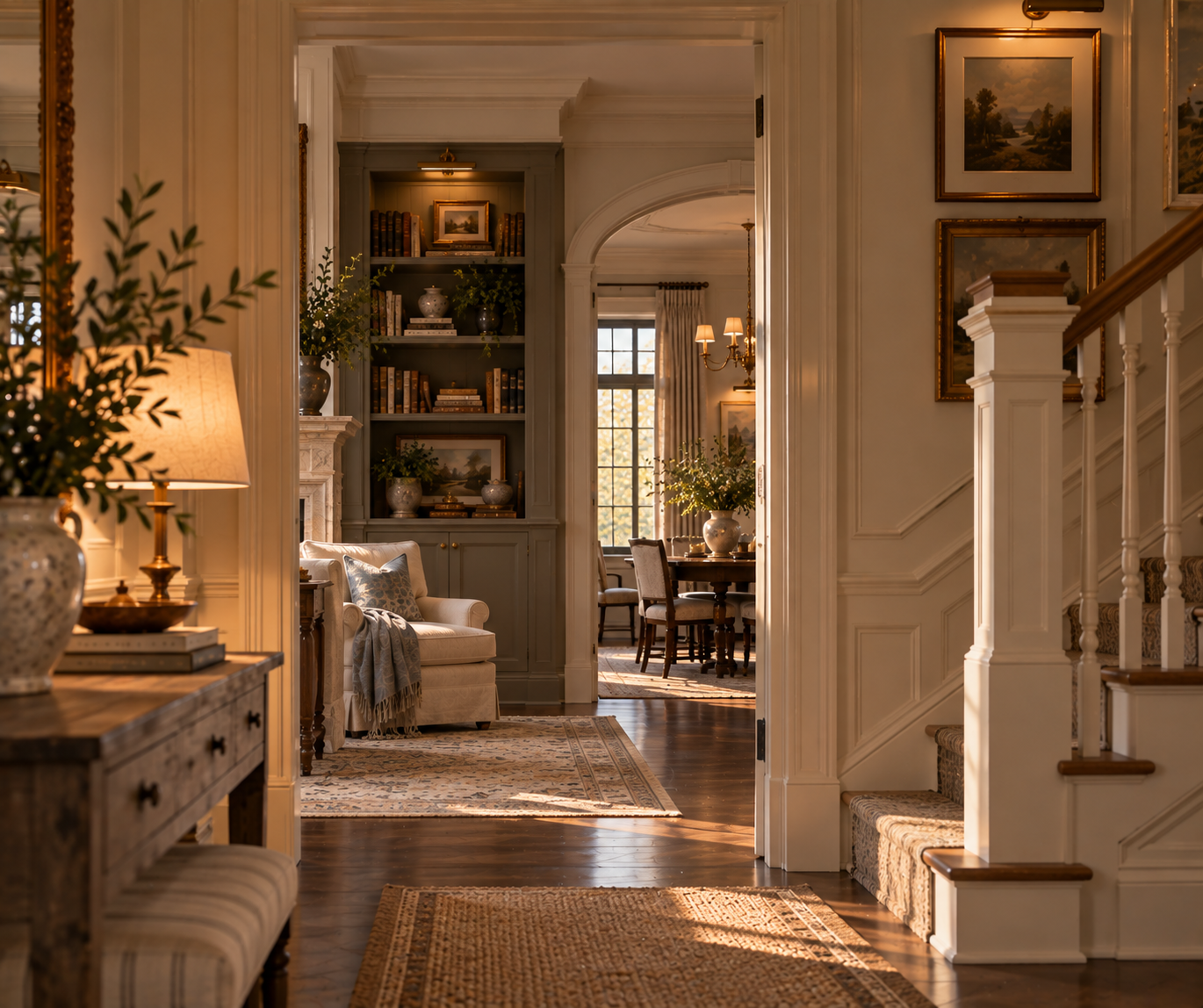
A doorway offered a glimpse into another space.
A staircase disappeared around a corner.
A hall ended with a window.
There was a sense of progression.
Modern homes often give us the opposite: stand in one spot and see the kitchen, dining room, living room, entry and sometimes the back patio.
That means we have to create discovery in other ways.
Perhaps you see only part of an antique cabinet through a doorway.
Maybe artwork at the end of a hall draws you forward.
A wallpapered powder room becomes a surprise.
A small reading corner is tucked somewhere you don't notice immediately.
Not every beautiful thing needs to announce itself from the front door.
Some of the best design rewards you for looking twice.
The Question I Wish More People Asked
When people begin decorating, the first question is usually some version of:
What should I put here?
I think there is a better question.
How do I want it to feel when I'm here?
Quiet?
Warm?
Intimate?
Fresh?
Grand?
Comforting?
A little mysterious?
Once you know that, design decisions become much more meaningful.
If you want a dining room to encourage people to linger, perhaps the chairs matter more than another decorative accessory.
If you want your bedroom to feel quiet, perhaps controlling the lighting matters more than buying new furniture.
If you want an entry to feel welcoming at night, perhaps the answer is a lamp glowing before anyone walks through the door.
Those aren't decorating tricks.
They are decisions about experience.
And experience is what turns a collection of rooms into a home.
The House Shouldn't Be Finished
Maybe this is the most freeing thing I have learned about interiors:
I don't think a truly good home is ever completely finished.
It changes because the people inside it change.
A chair moves.
A painting is found.
A book is added to the shelf.
Something inherited unexpectedly finds its place.
The sunlight changes with the season.
A room that once belonged to a child becomes something else entirely.
That isn't unfinished design.
That is a home being allowed to live.
So yes, choose the beautiful stone.
Hang the drapery properly.
Pay attention to scale.
Preserve the original millwork when you can.
Buy the wonderful lamp.
Those details matter tremendously.
But once they're there, don't spend your life protecting the room from the very thing it was designed for.
Life.
Because when someone walks into your home, they may notice the beautiful things.
But if you've done it well, there will be something else they notice first.
They may not even have a word for it.
They'll simply know they want to stay.
And that, to me, is atmosphere.
May your home always be a place where stories are gathered, seasons are celebrated and the porch light is left on a little longer.
— Melissa LaRosa
The Lantern & Oak
Stories of Home. Timeless Living.