The Cabinet That Guarded the Harvest
ARTICLE 006
The Lantern and Oak
Stories of Home. Timeless Living.
The Journal of Melissa LaRosa Interiors
Every home has a story. This is where we come to tell them.

The Forgotten Purpose of the American Pie Safe
There was a time when the most important piece of furniture in a kitchen wasn't the dining table.
It wasn't the stove, either.
It may have been a simple wooden cupboard standing quietly against the wall, its doors decorated with little patterns punched into sheets of tin.
Inside, there might have been a freshly baked loaf of bread, a pie cooling after Sunday dinner, or something prepared earlier in the day.
We know these cupboards today as pie safes.
And although they're now admired as charming pieces of American country furniture, their original purpose was much more practical.
They helped protect food.
Before refrigeration became an everyday convenience, families had to think carefully about where food was stored, how air moved around it, and how to keep insects and other pests away.
What I find so interesting is that the solution eventually became something beautiful.
Those tiny holes punched into the tin weren't simply decoration.
They were part of how the cabinet worked.
And once you understand that, the humble pie safe becomes a rather wonderful example of early American ingenuity.
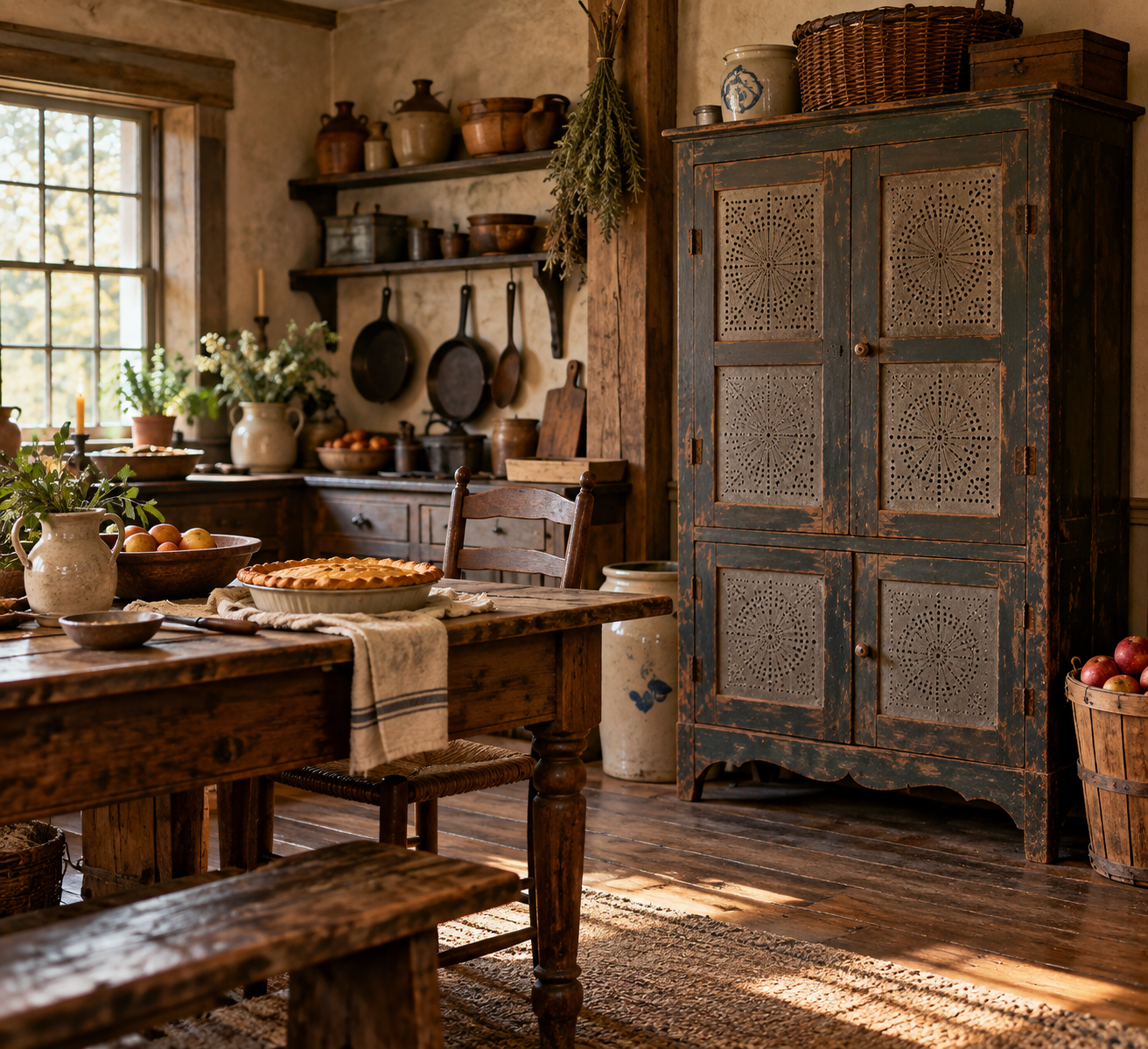
A Kitchen Before Refrigeration
I sometimes think we forget just how dramatically the modern kitchen has changed the way we live.
Today, we bring groceries home, open the refrigerator, put everything away, and rarely give much thought to what happens next.
But imagine managing a household before electric refrigeration.
Food storage required planning.
Certain foods needed cool conditions. Others needed to remain dry. Baked goods had to be protected from insects, and preserving the harvest required knowledge passed down through generations.
Depending on the household and region, families relied on a combination of pantries, food safes, springhouses, root cellars, drying, smoking, salting and preserving.
There wasn't one perfect solution.
There were different solutions for different needs.
And the pie safe was one of them.
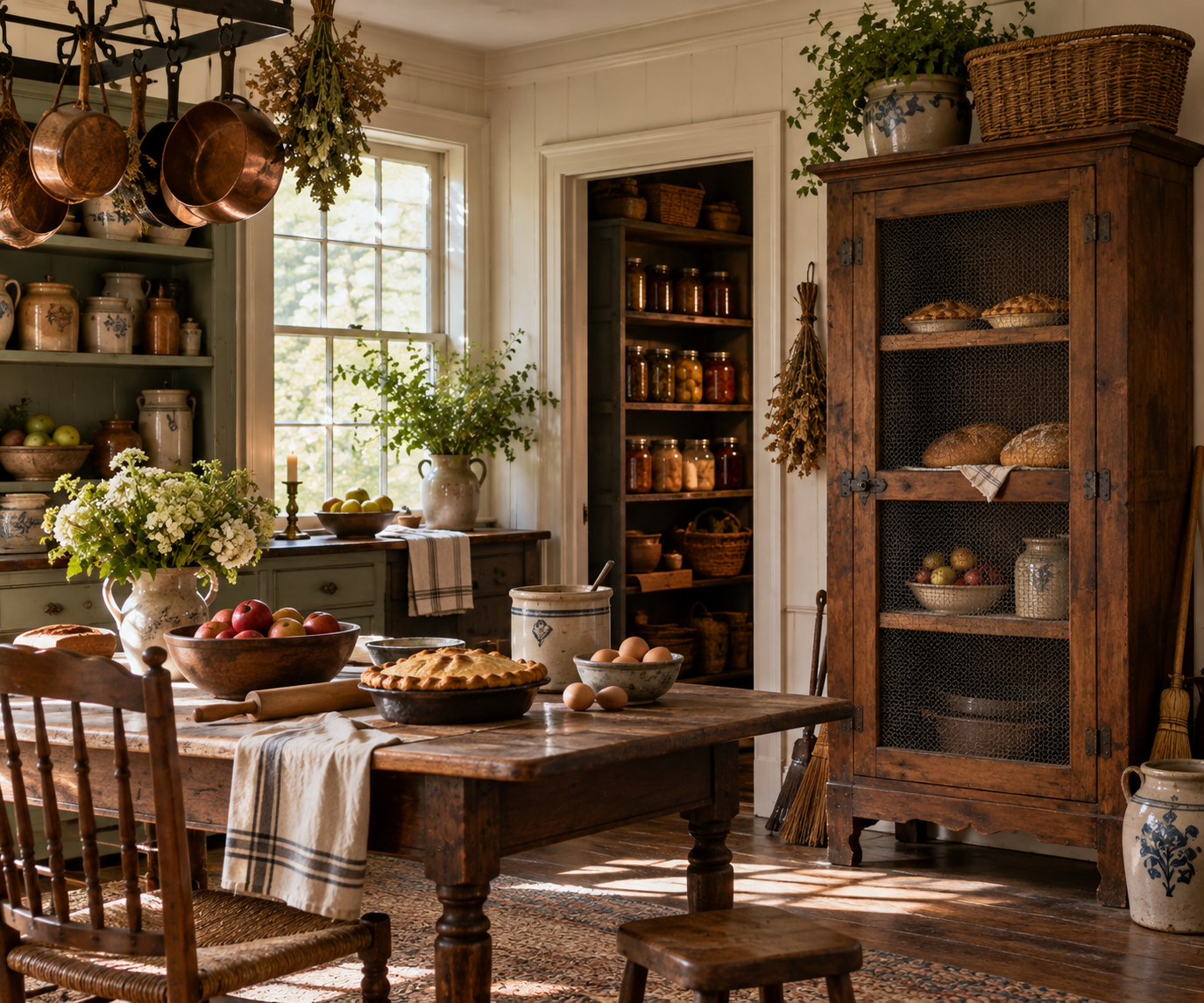
Why Were There Holes in the Doors?
This is the detail I especially love.
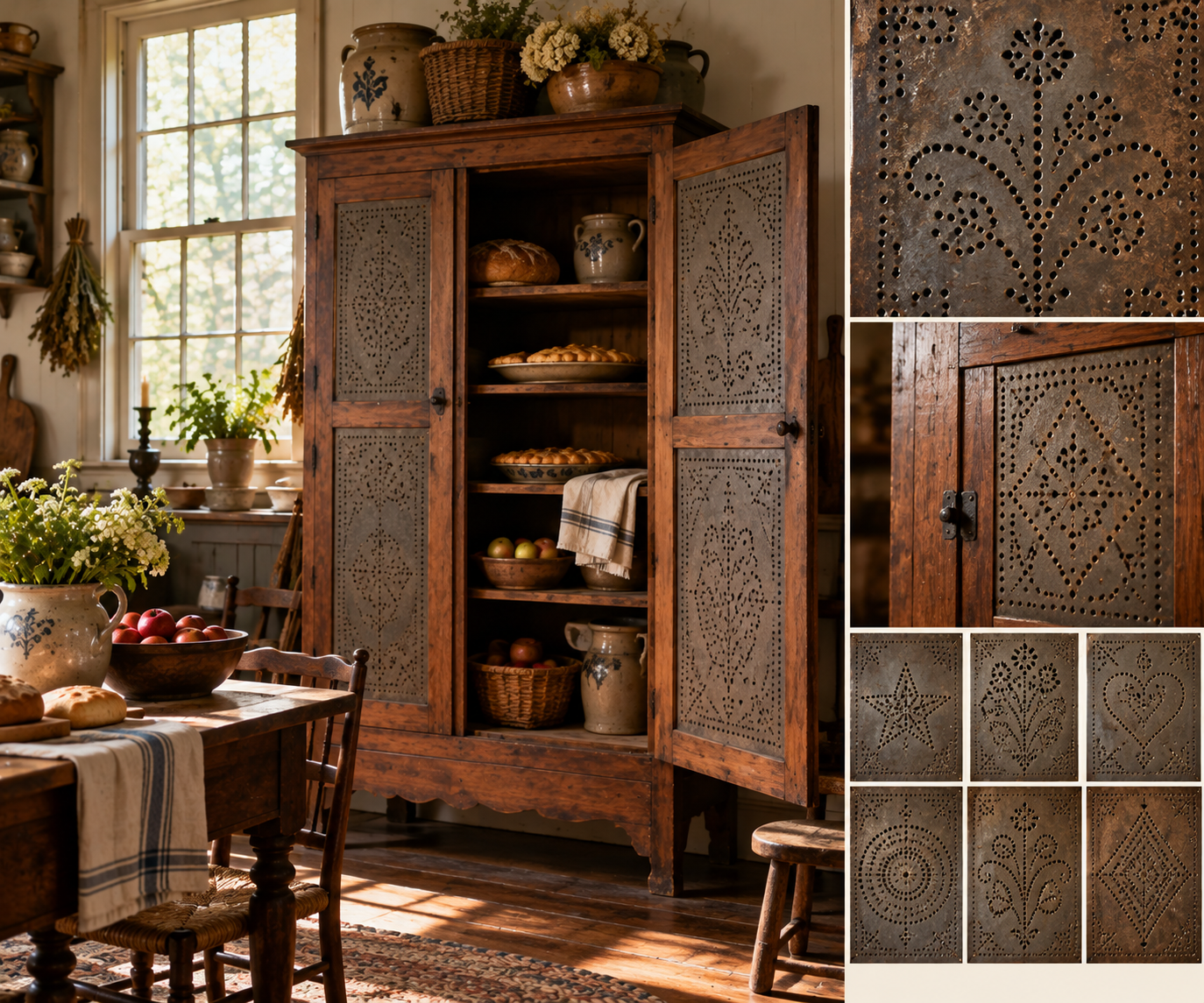
Many nineteenth-century pie safes were constructed from wood with panels of punched tin fitted into their doors, sides, or both.
The small openings allowed air to circulate while creating a barrier against flies and other pests.
Some earlier food safes used linen, screening or other materials instead.
But somewhere along the way, these practical openings became opportunities for craftsmanship.
Cabinetmakers and tinsmiths began arranging the holes into patterns.
Stars.
Hearts.
Flowers.
Diamonds.
Geometric arrangements.
Some were wonderfully simple. Others became surprisingly elaborate.
Imagine spending time creating a beautiful floral design on something whose primary responsibility was protecting yesterday's bread.
I think that's lovely.
Even the practical things in a home were given opportunities to be beautiful.
And perhaps that's a lesson worth remembering in our own kitchens.
A Pie Safe Wasn't Actually a Refrigerator
Here's something important that often gets lost when we talk about historic kitchens.
A pie safe helped protect food from pests and allowed ventilation, but it didn't actively refrigerate its contents.
It wasn't the same thing as a root cellar.
And the distinction matters.
A root cellar relied on cool environmental conditions, often using the insulating properties of the earth, to help preserve certain fruits and vegetables.
A pie safe was primarily a ventilated storage cabinet.
The two could serve very different purposes within the same household.
And not every old house had either one.
Climate, geography, available materials, household resources and local traditions all influenced how food was stored.
Here in the South, where heat and humidity could make preservation particularly challenging, understanding those differences becomes especially interesting.
It's another reminder that historic domestic design was rarely accidental.
It responded to the realities of everyday life.
Of course, a pie safe isn't a safe substitute for modern refrigeration. Today, foods requiring refrigeration should be stored according to current food-safety guidelines.

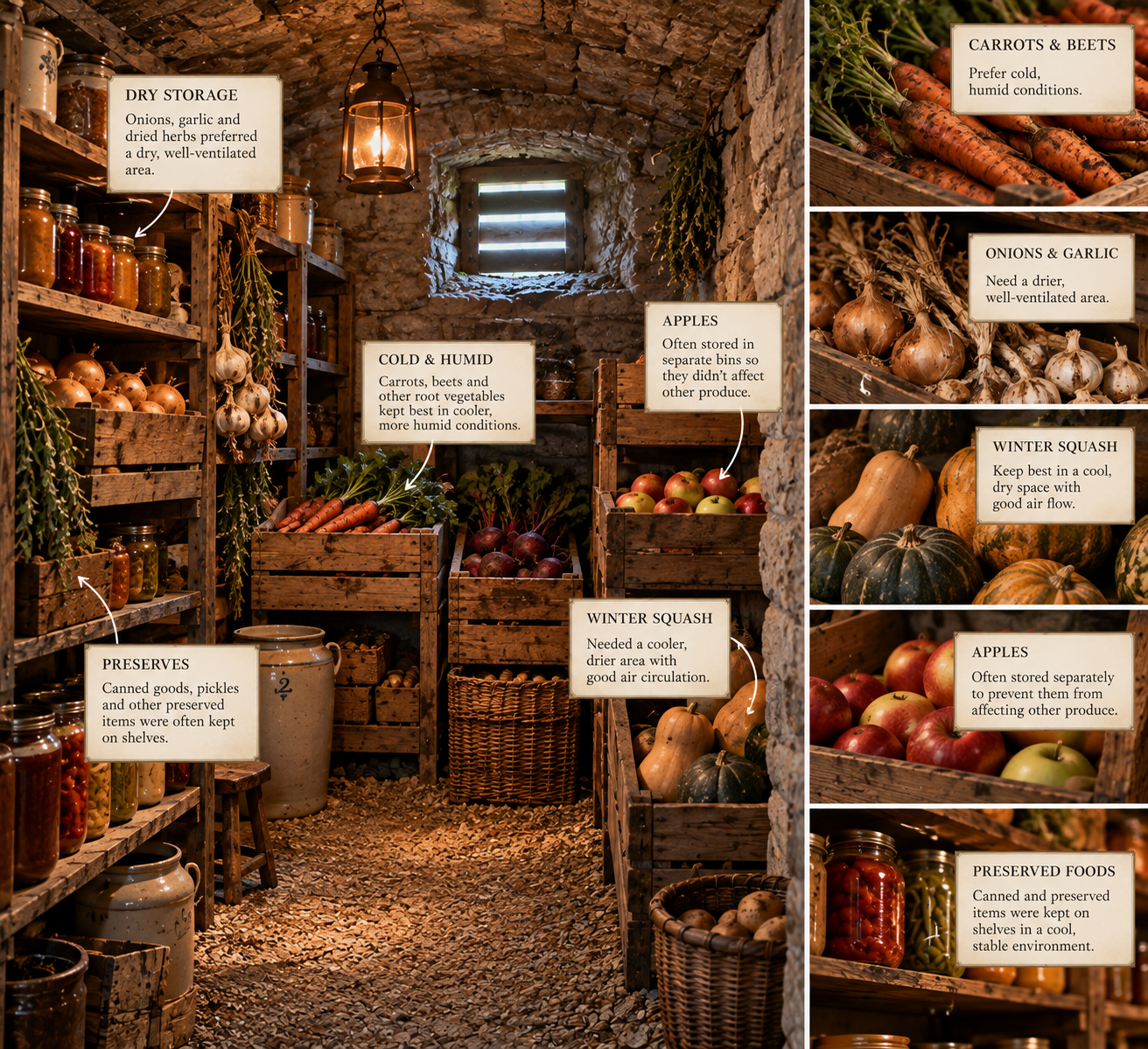
The Root Cellar Had Its Own Secrets
Since we're talking about the harvest, I want to share something else that surprised me when I began looking more closely at traditional food storage.
Not every vegetable wants the same environment.
Carrots and beets, for example, generally keep best in cold, humid conditions.
Onions and garlic prefer much drier storage.
Winter squash needs different conditions again.
That means a successful root cellar wasn't necessarily one big room where everything was simply piled together.
Different crops could require different storage areas or arrangements.
Even the placement of food mattered.
And although we tend to picture a romantic stone cellar filled with wooden crates, the reality of preserving a harvest required a good deal of knowledge and regular attention.
Food had to be inspected.
Spoiled produce removed.
Conditions managed.
It was work.
I think that's worth acknowledging, because while I love the beauty and traditions of historic domestic life, I never want to romanticize away the labor that made those households function.
The people doing that work were as much a part of the home's history as the architecture surrounding them.
When Useful Furniture Became Folk Art
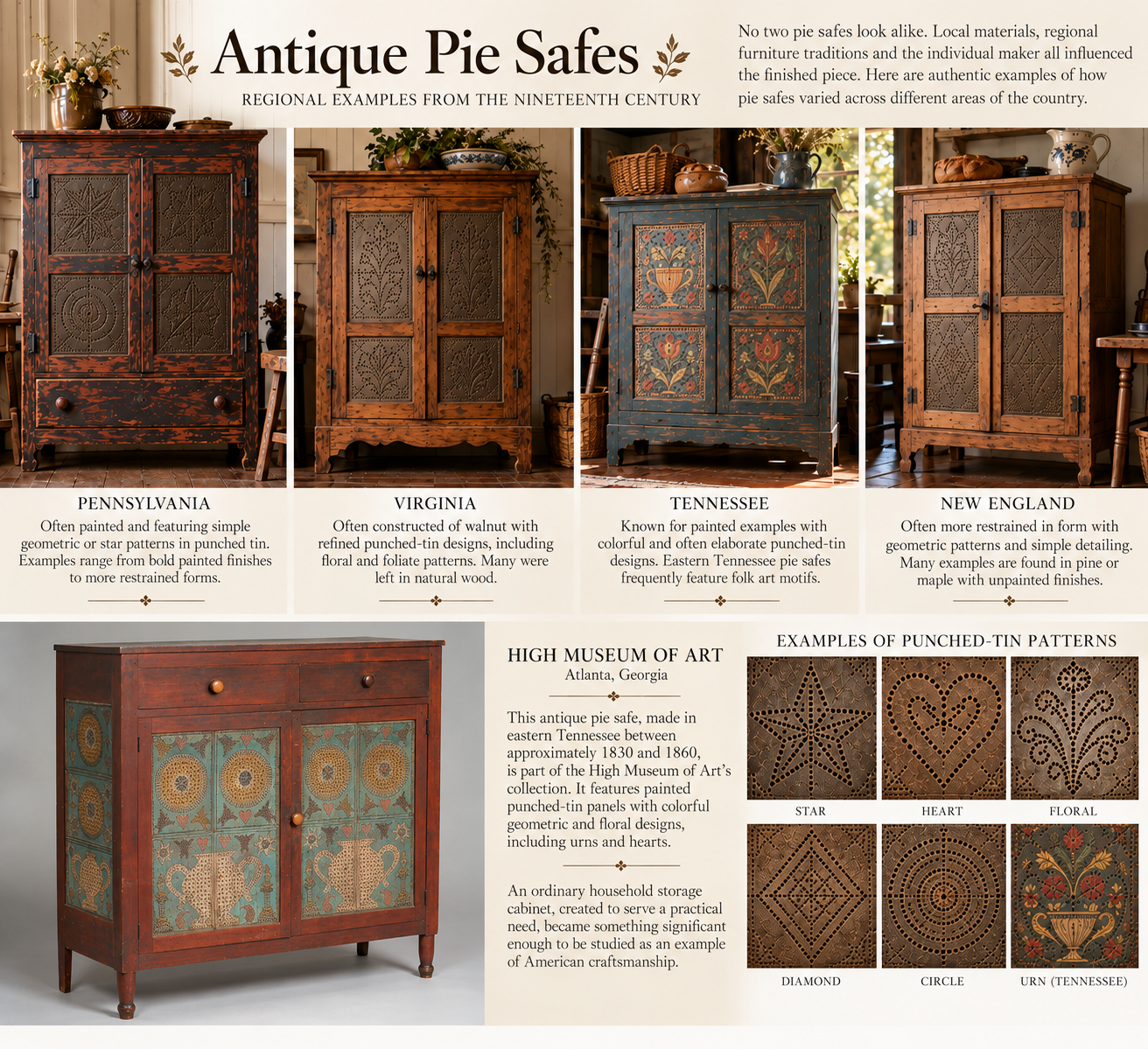
One of the most beautiful things about antique pie safes is that no two necessarily look alike.
A cabinet made in Pennsylvania might be quite different from one made in Tennessee or Virginia.
Local materials, regional furniture traditions and the individual maker all influenced the finished piece.
Some were painted.
Others were left to show the natural wood.
Some had simple rectangular doors.
Others featured carefully arranged punched-tin designs that became works of folk art in their own right.
And here's a detail I find particularly fascinating.
An antique pie safe made in eastern Tennessee between approximately 1830 and 1860, now associated with the High Museum of Art's collection, features punched-tin panels decorated with colorful geometric and floral designs.
Think about that.
An ordinary household storage cabinet, created to serve a practical need, became something significant enough to be studied as an example of American craftsmanship.
The beauty was never separate from the usefulness.
It grew out of it.
What I Would Do With One Today
Now, of course, my designer brain starts working.
If I came across a beautiful antique pie safe, I wouldn't necessarily want to tuck it away in a rustic kitchen.
In fact, I think these pieces can be especially interesting when placed somewhere unexpected.
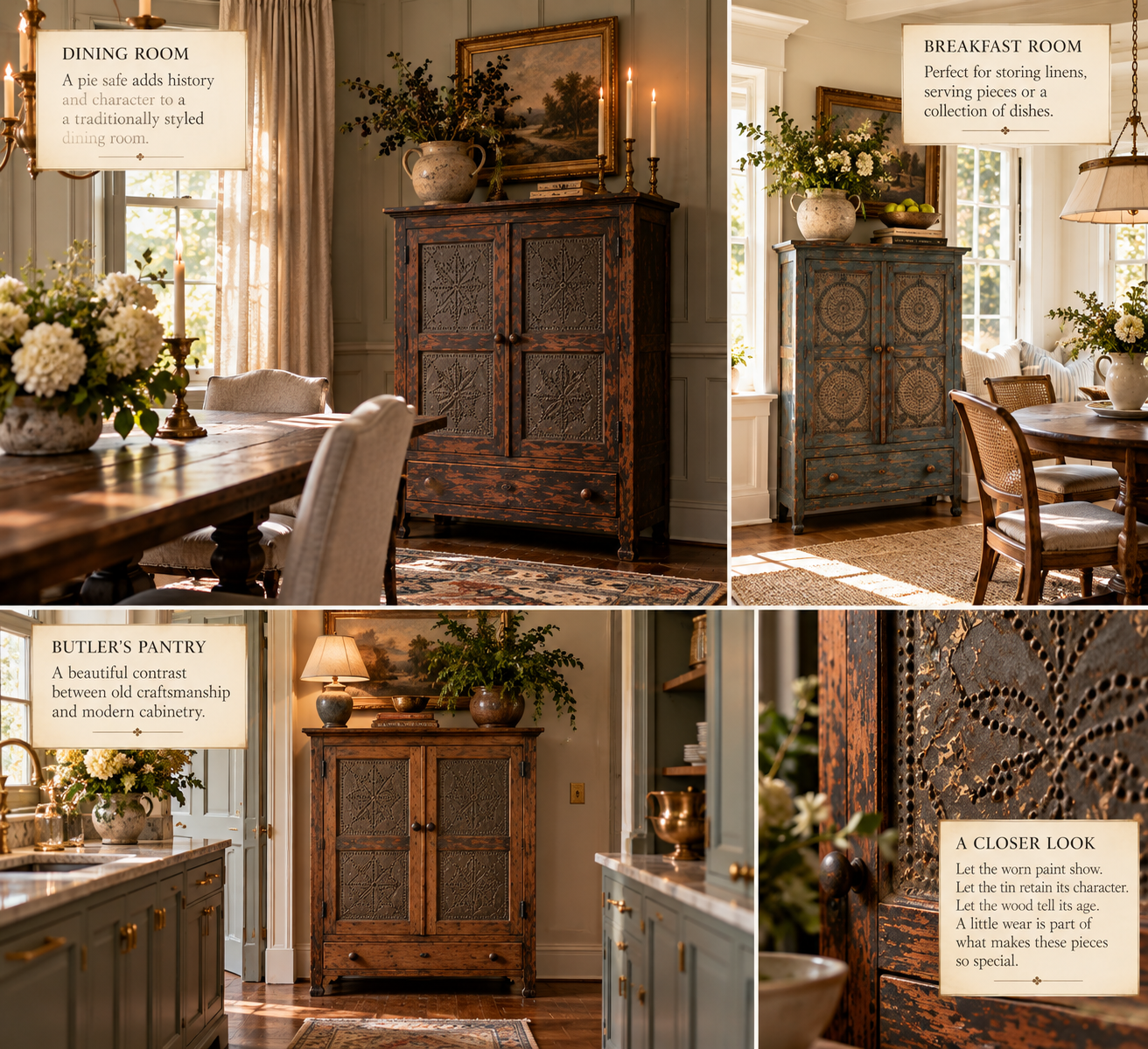
Imagine a softly painted dining room with traditional millwork, a beautiful antique dining table, linen drapery and a carefully restored pie safe against one wall.
Or a bright breakfast room where an old wooden safe holds linens, serving pieces or a collection of dishes.
I might even use one in a butler's pantry, where the contrast between old craftsmanship and modern cabinetry could be particularly beautiful.
The key, for me, would be restraint.
I wouldn't surround it with a dozen other objects trying to make the room look old.
I'd allow the piece to stand on its own.
Let the worn paint show.
Let the tin retain its character.
Let the wood tell its age.
And I certainly wouldn't feel compelled to make it look brand-new.
I think we're sometimes too quick to restore away the very details that make an antique interesting.
Of course, damaged pieces may need careful conservation, and original surfaces deserve thoughtful handling.
But a little age?
A little wear?
Those are often the things I love most.
The Difference Between Decorating With History and Understanding It
This is something I've been thinking about quite a bit lately.
There is a difference between buying an antique because it looks beautiful and understanding why that antique exists.
Both can be enjoyable.
But the second gives the object a much deeper meaning.
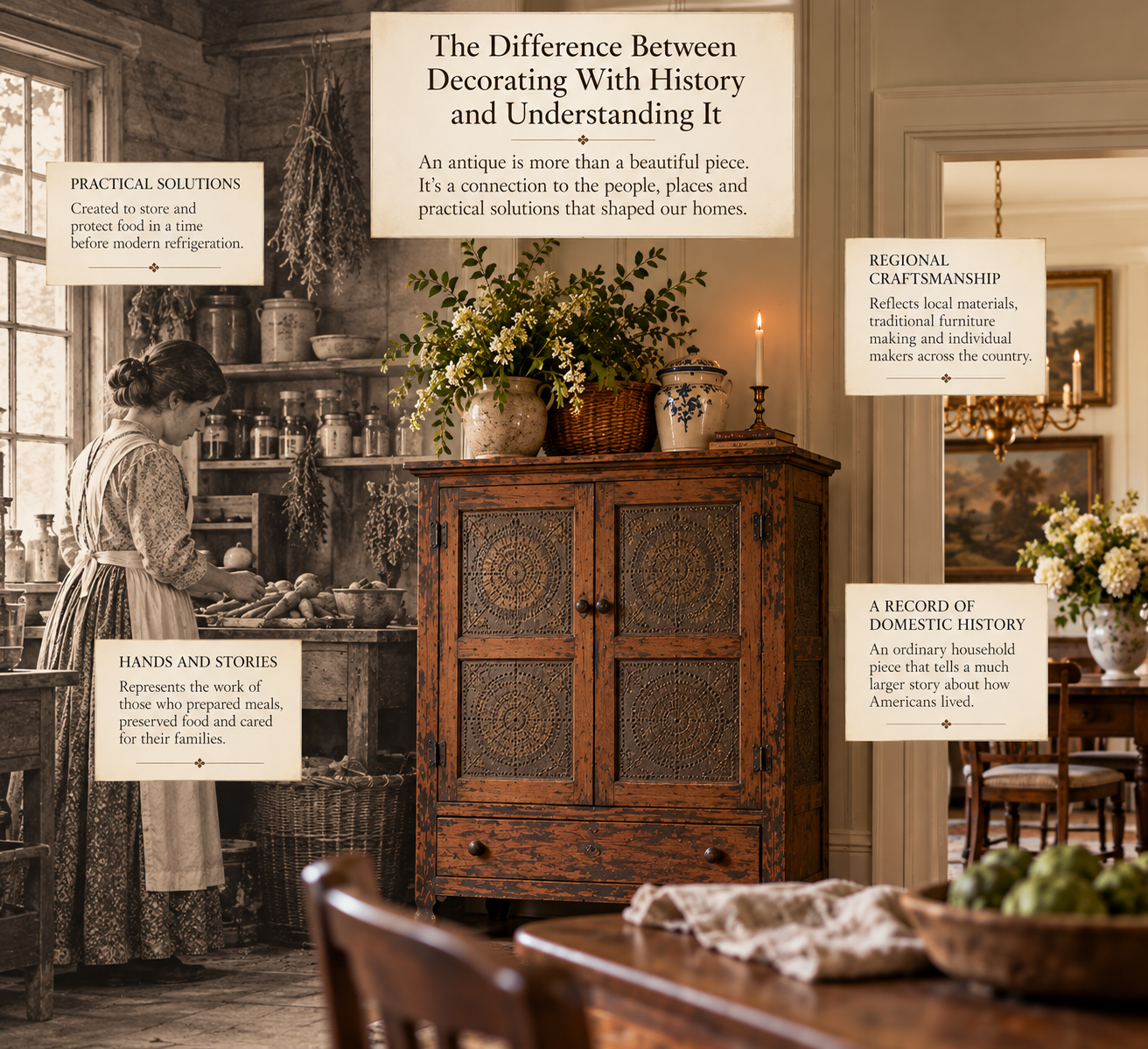
When I look at a pie safe now, I don't simply see a charming old cabinet.
I see the evolution of the American kitchen.
I see regional craftsmanship.
I see a household finding practical solutions to everyday problems.
I see the hands that prepared meals, preserved food, cleaned kitchens and cared for families.
And I see how an ordinary piece of furniture can become a small record of domestic history.
That's what I want to continue exploring through The Lantern & Oak.
Not simply how historic homes looked.
But how people actually lived inside them.
Because the more we understand the lives that unfolded within those walls, the more thoughtfully we can approach preserving what remains.
Perhaps the Kitchen Has Always Been the Heart of the Home
As October settles in, I find myself drawn to the quieter traditions of the season.
A basket of apples on the counter.
A loaf of bread cooling beneath a linen towel.
Vegetables gathered for a pot of soup.
The scent of something wonderful coming from the oven.
A table waiting for everyone to come home.
Our kitchens may look very different from those of two hundred years ago, but I think some things haven't changed nearly as much as we imagine.
We still gather around food.
We still prepare meals for people we love.
We still celebrate the seasons through what comes from the garden and what finds its way onto the table.
And we still create memories in the ordinary spaces where everyday life happens.
Perhaps that's why I'm so drawn to these old pieces of furniture.
They remind me that a beautiful home has never been only about its architecture or decoration.
It has always been about the people who live there.
And sometimes, something as simple as an old wooden cupboard can tell us an extraordinary amount about them.
The next time you come across a pie safe in an antique shop or historic house, take a closer look.
Notice the wood.
The little patterns in the tin.
The hinges.
The shelves.
Imagine what it may have held.
And remember that what we now admire as a beautiful antique was once simply part of someone's ordinary day.
Isn't it wonderful how ordinary things can become extraordinary when enough time passes?
May your home always be a place where stories are gathered, seasons are celebrated and the porch light is left on a little longer.
— Melissa