ARTICLE 011
The Lantern and Oak
Stories of Home. Timeless Living.
The Journal of Melissa LaRosa Interiors
Every home has a story. This is where we come to tell them.
The House That Received Its Own Letters
Before doorbell cameras and package notifications, the American home had a quieter way of welcoming the mail.
When the Mailman Came Knocking
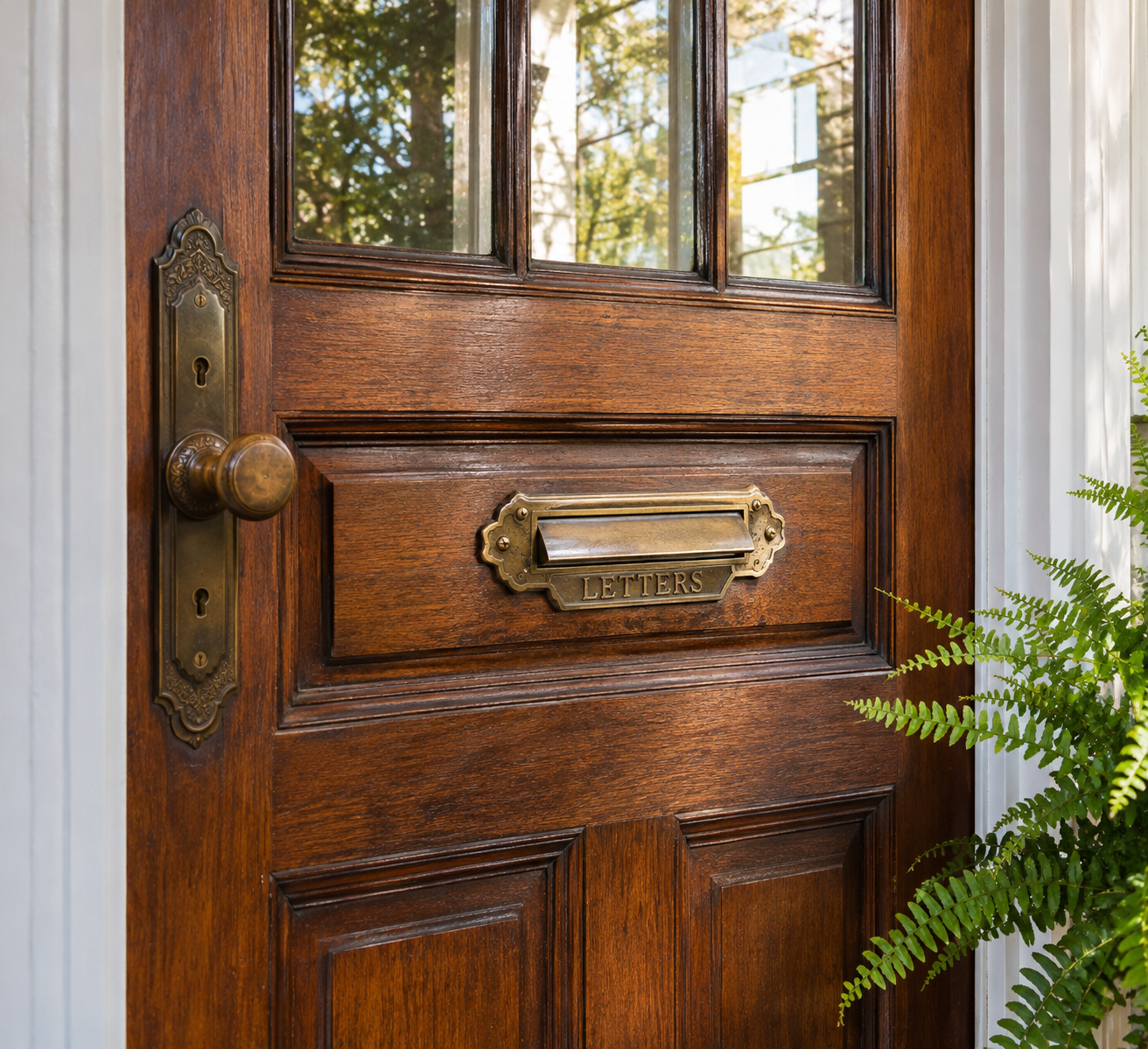
Imagine an American neighborhood in the late 1800s. The streets are quieter, the houses stand close to the sidewalk, and the arrival of the postman is a familiar part of the day.
But receiving a letter wasn't always as simple as opening a mailbox.
Before free city mail delivery began in 1863, many Americans collected their correspondence directly from the post office. When letter carriers eventually began making their rounds through residential neighborhoods, they delivered mail by hand.
They knocked, rang the bell, or sometimes blew a whistle to announce their arrival.
And if no one answered? The letter often went back into the carrier's satchel until another delivery attempt could be made.
It was a charmingly personal system, perhaps, but hardly an efficient one.
A Small Opening That Changed Everything
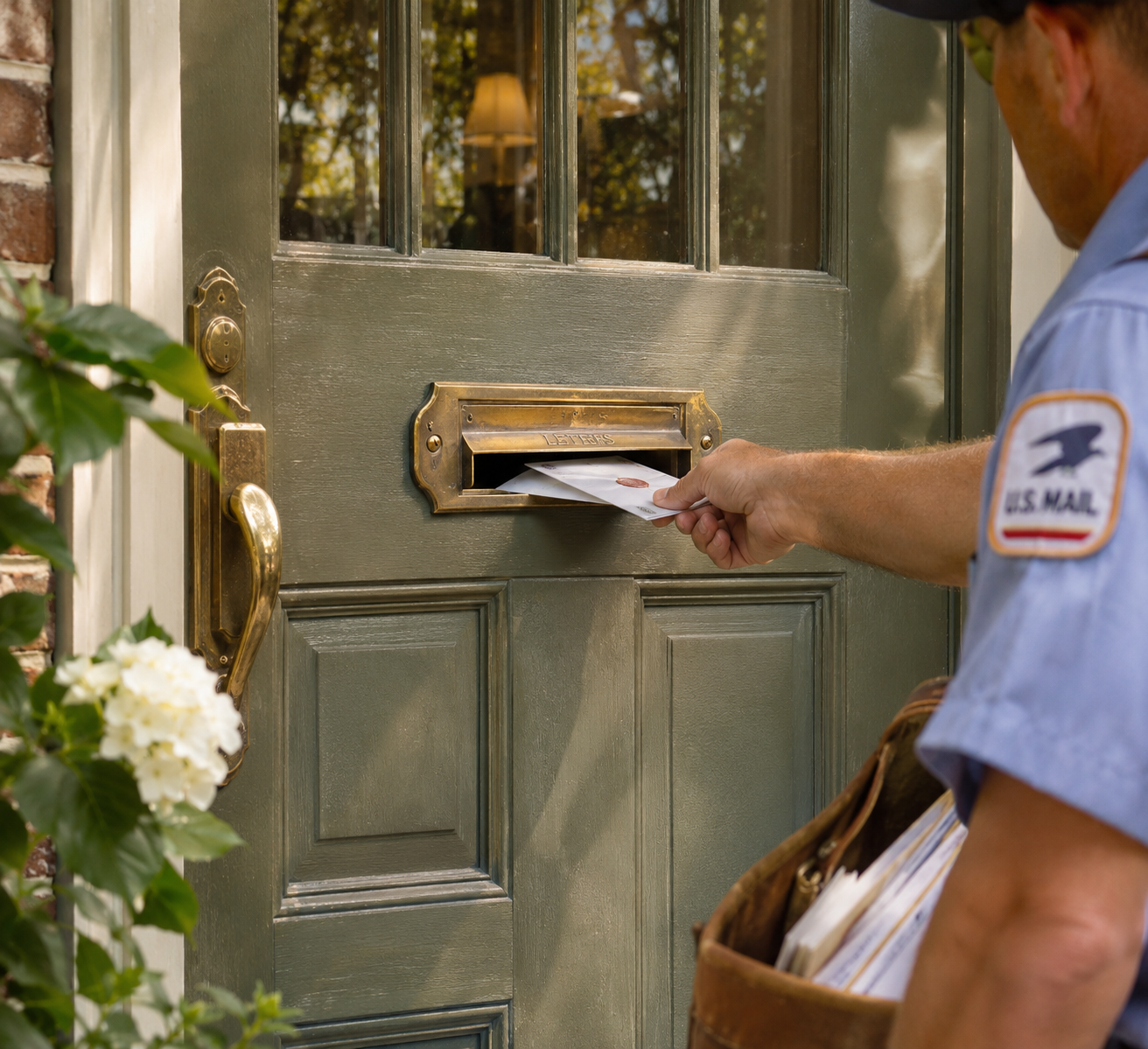
The solution was remarkably simple: a narrow opening fitted with a hinged metal flap.
The letter carrier could slide the day's correspondence through the exterior door or wall, allowing it to fall inside the house or into a receptacle waiting on the other side.
No one needed to answer the door. No one needed to be home.
Some mail slots were modest, functional pieces of hardware. Others featured decorative brass plates, embossed lettering, or carefully shaped details that complemented the home's architectural style.
Inside, a wire basket or enclosed receptacle could catch the letters before they reached the floor.
It was a practical innovation, but it also introduced something rather lovely into everyday domestic life: the possibility of a letter waiting quietly inside the house, long before anyone knew it had arrived.
The Smithsonian's National Postal Museum preserves examples of these letter slots dating to the late nineteenth century.
The Year the Front Door Changed
Here is a piece of American postal history that may surprise you.
By 1912, new customers receiving city mail delivery were required to provide a mail slot or suitable receptacle. Existing customers were encouraged to do the same.
The reason was not merely convenience for homeowners.
In 1914, postal officials estimated that letter carriers were losing between thirty minutes and an hour each day waiting for people to answer their doors.
On March 1, 1923, mail slots or receptacles became a requirement for city delivery service.
A small architectural detail had become part of a much larger transformation in how American neighborhoods functioned.
A MOMENT IN HISTORY
1863
Free city delivery begins
1912
New customers need mail receptacles
1923
Receptacles required for city delivery
When Even the Mailbox Was Part of the Architecture
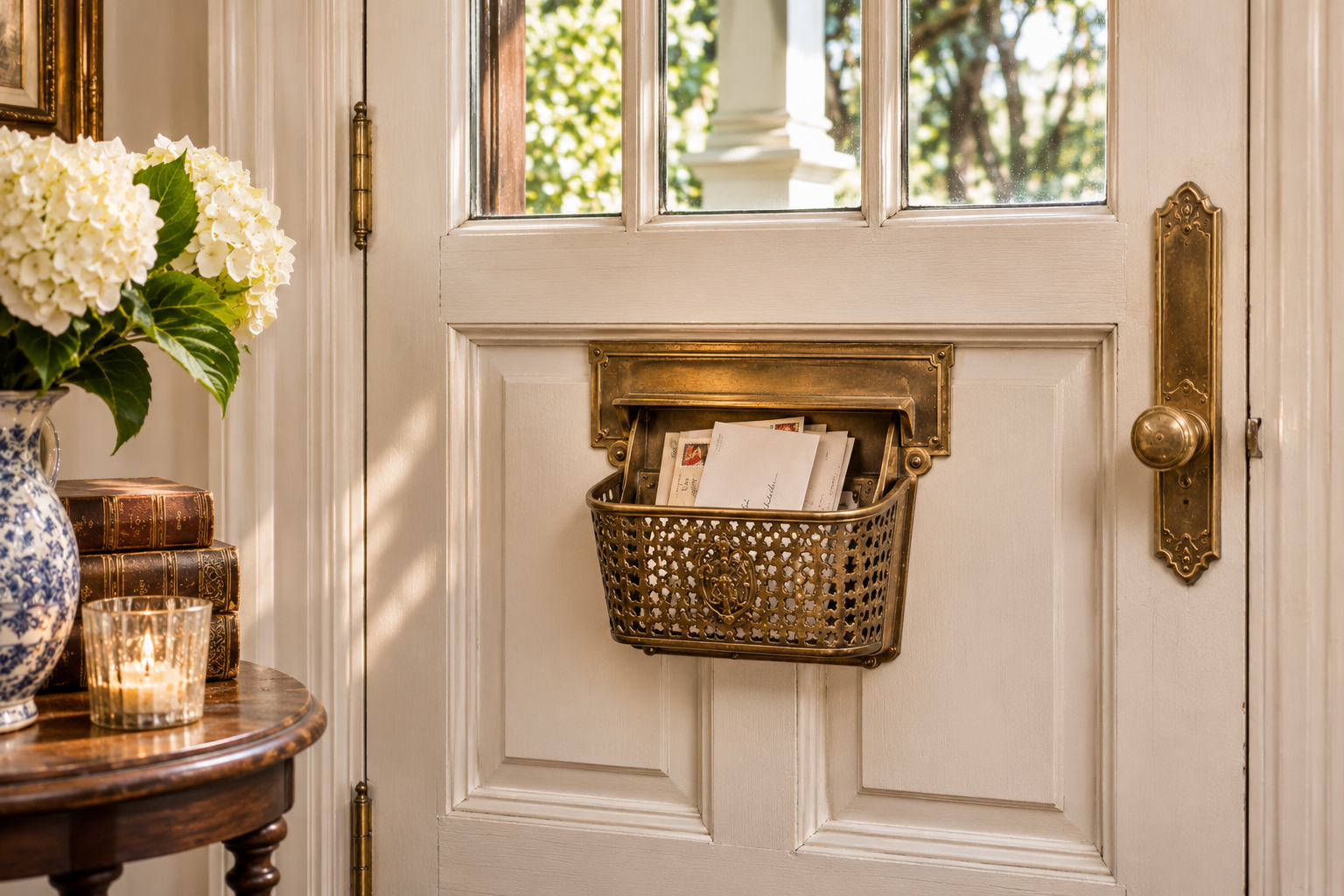
In a thoughtfully designed historic home, even the smallest hardware could contribute to the character of a room.
A brass letter slot might sit beneath a handsome door knocker, surrounded by painted wood panels and traditional millwork. Its proportions could complement the door's design, while its metal finish echoed nearby hinges, handles, or escutcheons.
Not every house featured an elaborate example. Many were plain and practical. But those that survived offer a wonderful glimpse into an era when everyday necessities were often expressed through architectural detail.
As an interior designer, I find these smaller elements especially compelling.
We often admire a historic home's grand staircase, original fireplaces, or beautifully proportioned windows. Yet the details that reveal how people actually lived are sometimes much less conspicuous.
A mail slot is one of them.
It reminds us that architecture is not simply about appearance. It is also about the small accommodations a home makes for the routines of daily life.
Why Did They Disappear?
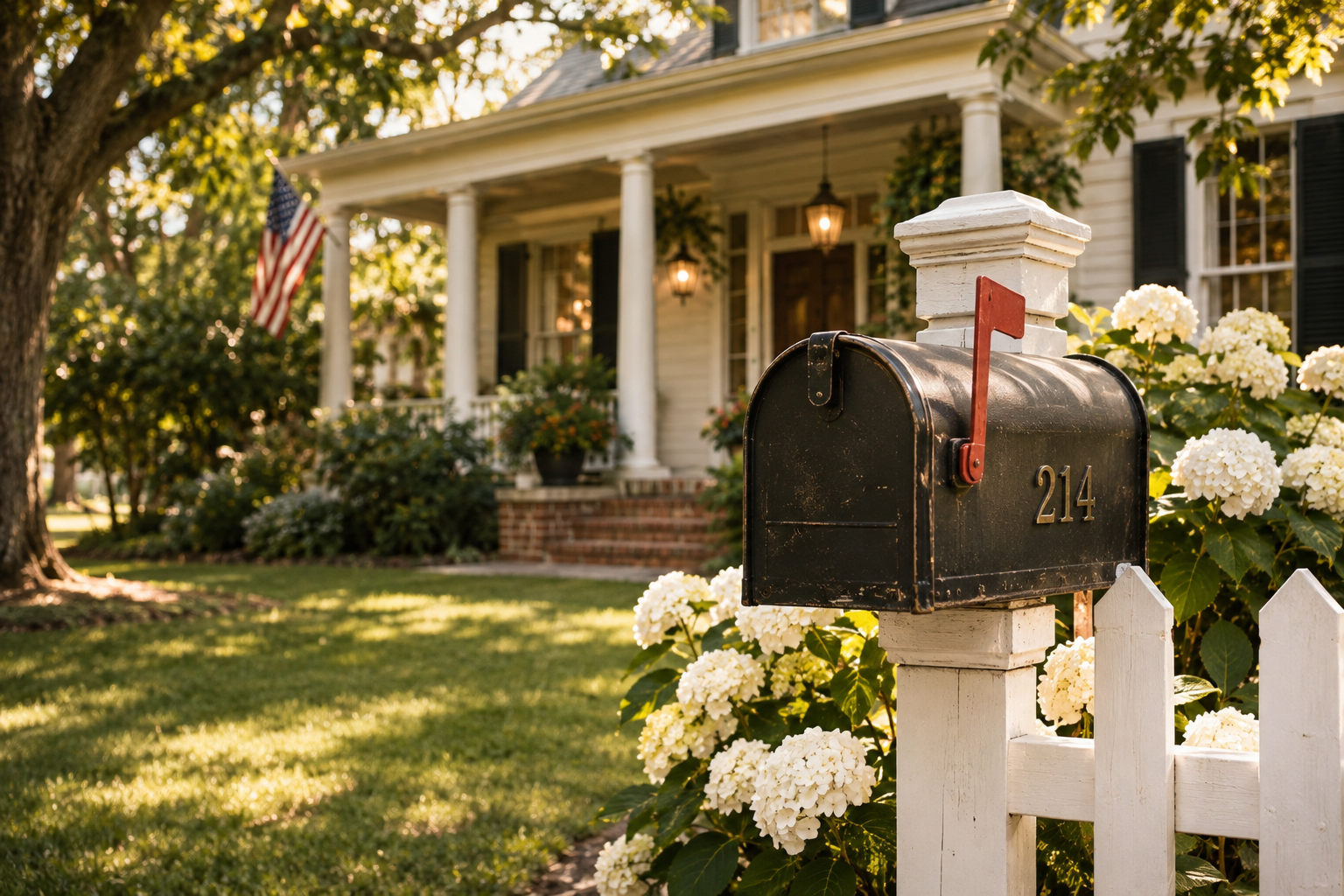
As American neighborhoods expanded beyond their older urban centers, the way mail was delivered began to change.
By the 1930s, postal carriers were serving some homes with mailboxes positioned along the curb. The suburban building boom of the 1950s helped make curbside delivery increasingly familiar.
Mail no longer needed to enter directly through the front door.
Over time, changing construction practices, delivery arrangements, and concerns about drafts or unwanted openings in exterior doors also made traditional slots less appealing in some homes.
The front-door letter slot did not disappear altogether. Many historic houses retain them, and some remain in use today.
But the feature became less common as new residential neighborhoods adopted different approaches to mail delivery.
A Detail Worth Preserving
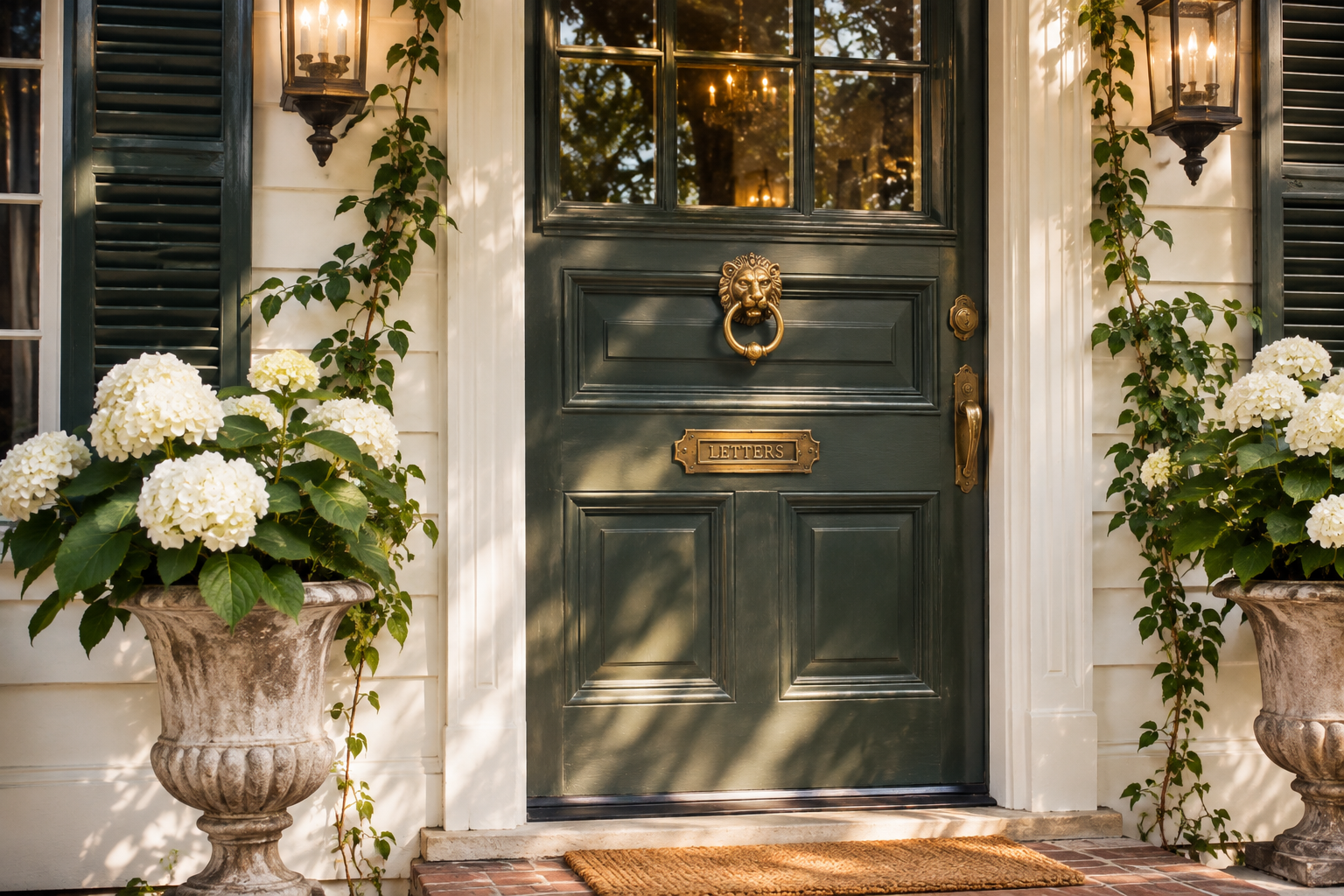
When restoring or renovating a historic home, the temptation can be to replace anything that no longer serves an obvious purpose.
An old mail slot might seem insignificant beside the larger decisions involved in updating a house.
But original hardware has a way of telling us things that newer materials cannot.
The shape of a brass plate, the wear around its opening, even the placement of a small interior receptacle can offer clues about how a home was once used.
If the original slot is no longer functional, preserving it as an architectural feature may still be worthwhile. A thoughtful restoration can also address air leakage and security without automatically sacrificing the character of the door.
Historic preservation is not about refusing modern convenience. It is about recognizing which details deserve to accompany a house into its next chapter.
The Letters That Once Passed Through
Consider, for a moment, what might have arrived through one of these little openings.
A handwritten invitation. A postcard from a distant relative. A letter announcing a new baby. News from a son serving overseas. A Christmas greeting, carefully addressed in familiar handwriting.
The mail slot itself was an ordinary household fixture.
What passed through it was anything but ordinary.
And perhaps that is why these details continue to capture our imagination. They remind us that historic houses were never simply collections of beautiful rooms. They were places where people waited, celebrated, worried, hoped, and heard from those they loved.
A narrow opening in a front door connected the private world of the home to everything happening beyond it.
A Final Thought
We often measure progress by the conveniences we gain, but the homes of earlier generations remind us that thoughtful design has always been part of daily life.
Long before smart doorbells, delivery alerts, and digital notifications, a small brass opening allowed the outside world to reach quietly into the home.
And sometimes, the most revealing pieces of architectural history are not the grand features we notice immediately.
They are the little ones we almost overlook.
May your home always be a place where stories are gathered, seasons are celebrated and the porch light is left on a little longer.
The Lantern & Oak Journal
Stories of Home. Timeless Living.