ARTICLE 010
The Lantern and Oak
Stories of Home. Timeless Living.
The Journal of Melissa LaRosa Interiors
Every home has a story. This is where we come to tell them.
Before Smart Homes, Houses Had Secrets
The Lantern & Oak Journal | Issue No. 010
I have a confession.
I can walk into a beautifully restored historic home, admire the craftsmanship, appreciate the architecture, and marvel at the centuries of history surrounding me.
But the moment someone mentions a hidden staircase, a mysterious little door, or a peculiar architectural feature nobody can explain?
Well, now you have my undivided attention.
Forget the perfectly polished drawing room. I want to know what's behind that door.
Because here's something I've learned about old houses: They were full of clever ideas, peculiar habits, and solutions to problems we no longer remember having.
And occasionally, they were just a little ridiculous.
So today, we're wandering through the wonderfully curious world of historic homes, where convenience looked entirely different, privacy was a luxury, and even the walls had a few surprises.
Pour yourself something warm. We're going exploring.
01 | The Staircase That Wasn't for You
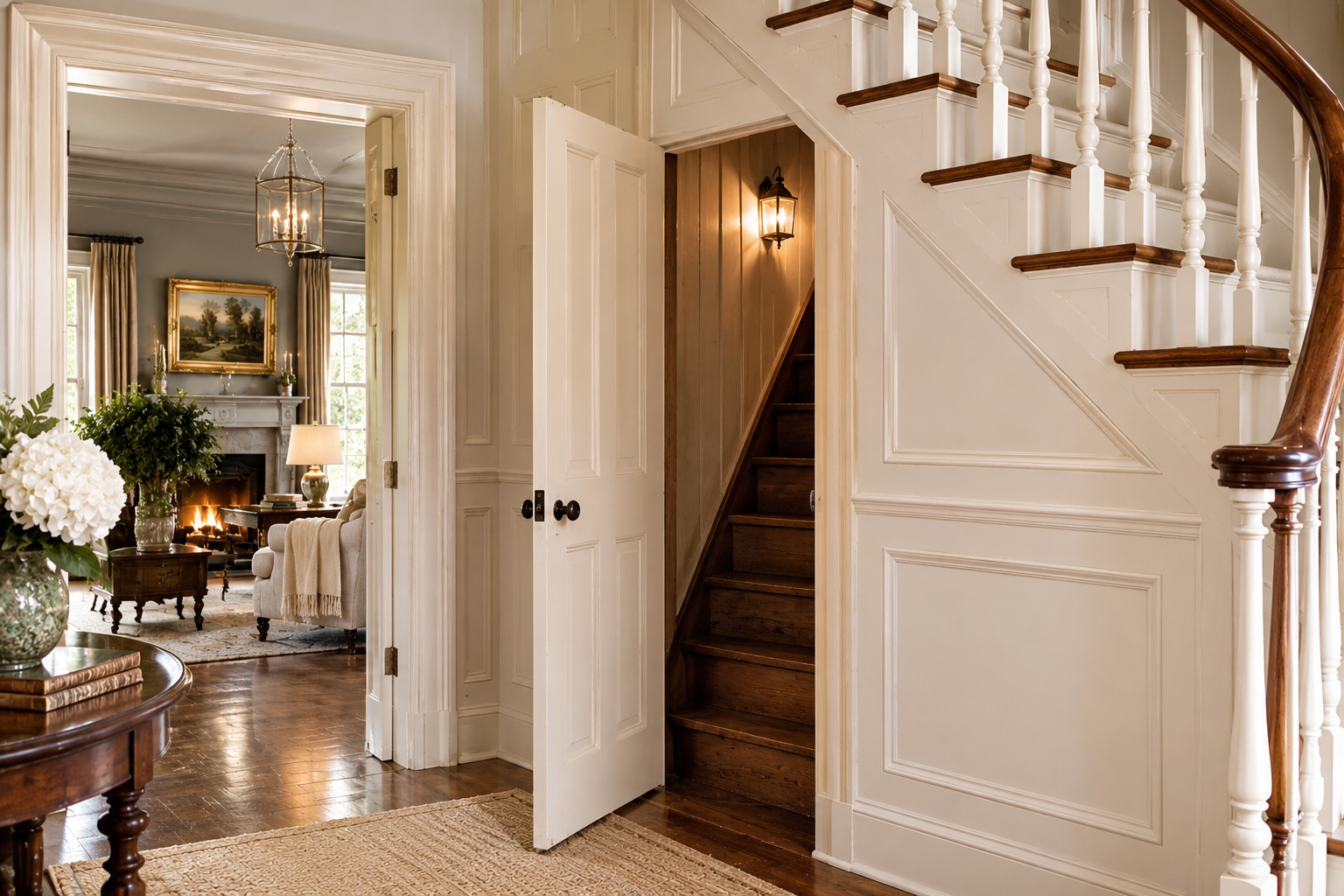
Imagine purchasing a beautiful nineteenth-century home.
You have your grand staircase, beautifully carved newel posts, elegant banisters, and an entrance hall practically begging for a dramatic arrival.
And then you discover another staircase.
Smaller. Narrower. Tucked away behind a door.
Did the original owners have a secret escape route?
Were they hiding something?
Probably not.
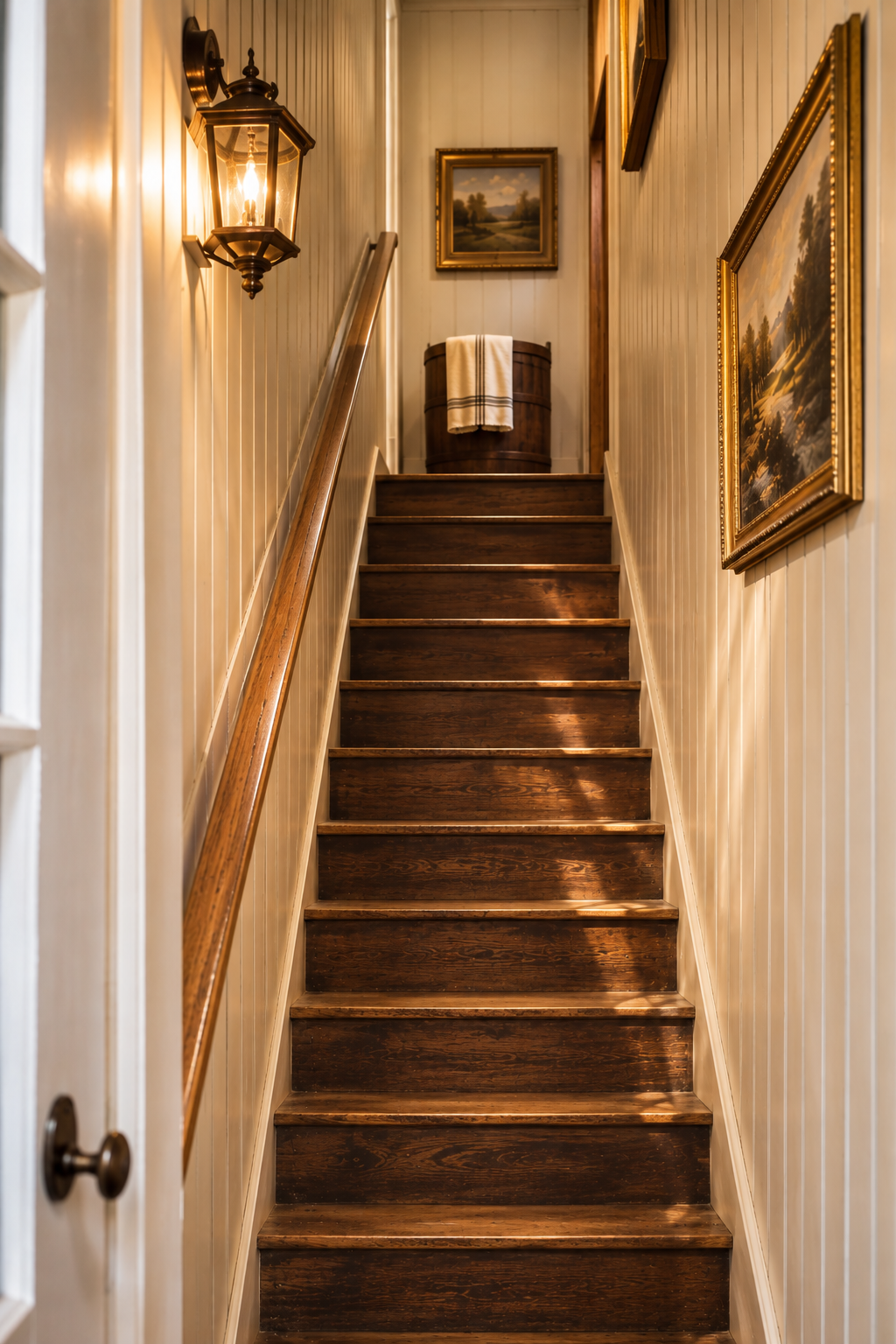
In many wealthy nineteenth-century households, these were servants' staircases, designed to allow domestic staff to move between floors without passing through the principal family rooms.
The arrangement reflected the rigid social hierarchy of the period. Household work was meant to happen efficiently, and often as invisibly as possible.
Today, these staircases offer a fascinating glimpse into the lives of the people who kept these grand homes running.
And while I adore a beautiful main staircase, I find myself equally interested in the little one nobody was supposed to notice.
Because that's often where the real stories begin.
02 | The Door That Wasn't Quite a Door
Have you ever noticed a tiny door built into the wall of an old house?
Not large enough to walk through. Not particularly decorative. Just a curious little opening that seems to have no business being there.
Before assuming you've discovered a secret passage, consider something far more practical.
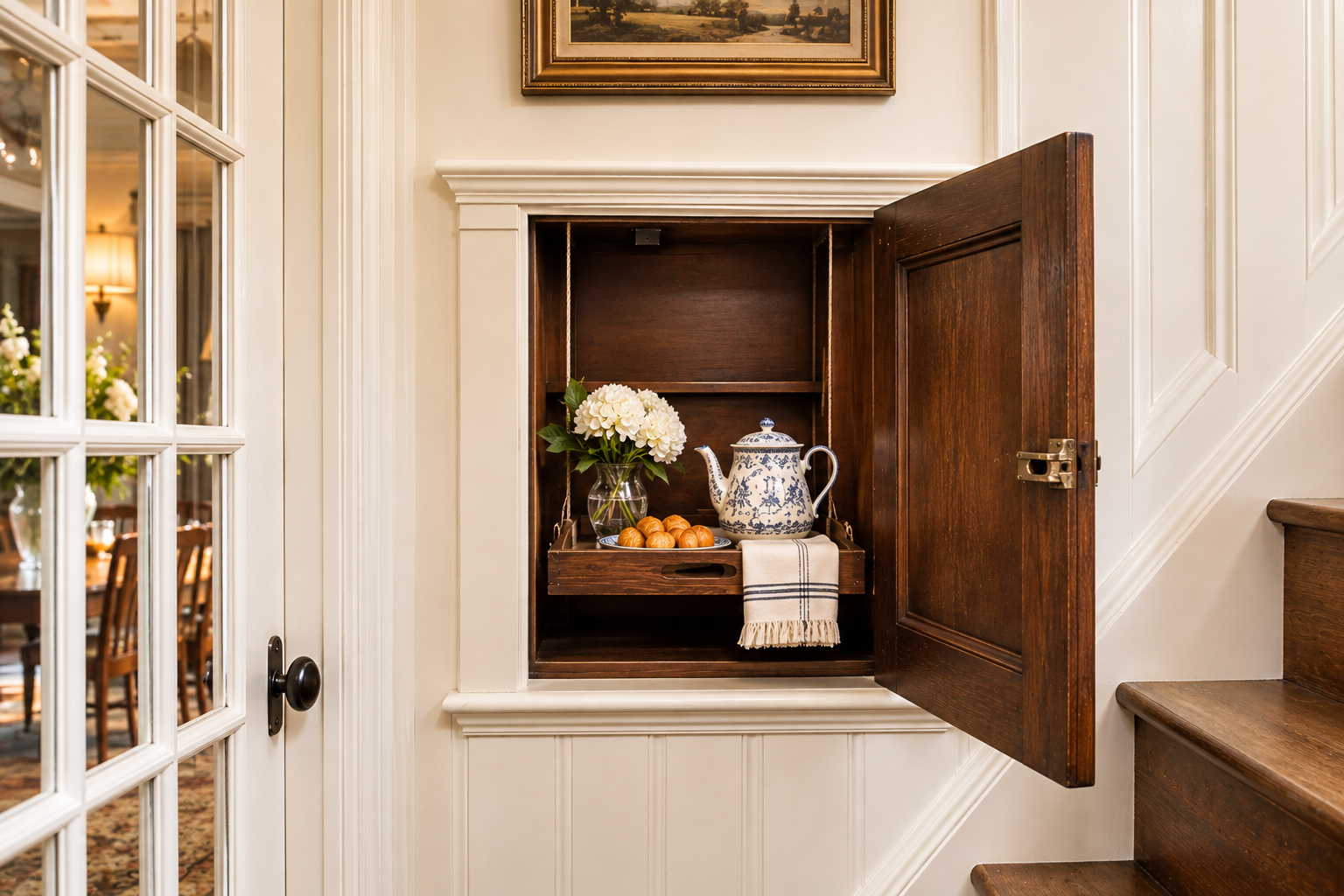
It might have been a laundry chute, a dumbwaiter opening, or access to plumbing, storage, or another household system.
Dumbwaiters were particularly useful in larger homes. These small lifts could move food, dishes, and other supplies between floors without requiring someone to carry everything up and down the stairs.
Essentially, the house had its own miniature delivery service.
And frankly, if someone offered me a beautifully concealed dumbwaiter to transport coffee and snacks between floors today, I would have a difficult time saying no.
Some historic conveniences deserve a comeback.
03 | When a House Had to Breathe
Before air conditioning, homeowners couldn't simply walk over to a thermostat and make August disappear.
They had to get creative.
And the architecture did much of the work.
Tall ceilings allowed warm air to rise above the occupied portion of a room. Tall windows and transoms could encourage airflow. Deep porches shaded windows and walls from the sun.
In some homes, strategically placed windows and doors helped capture cross breezes.
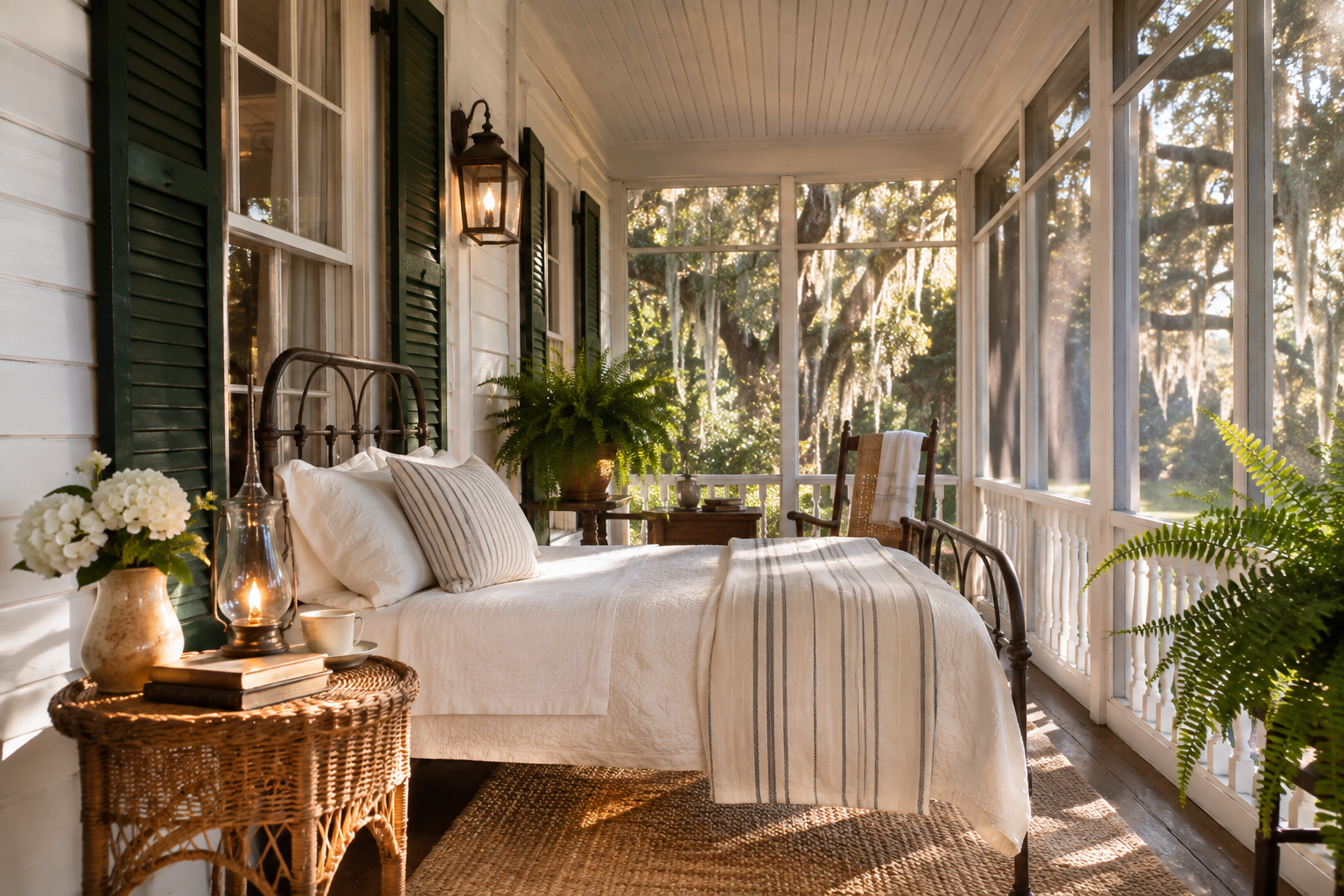
And then there were sleeping porches.
Yes, people actually slept outside, or in screened porch-like spaces, hoping to catch a cooler breeze on warm nights.
Sleeping porches became especially popular in the late nineteenth and early twentieth centuries, when fresh air was also widely associated with good health.
Imagine explaining that to someone today.
"Where's the guest bedroom?"
"Outside. We thought you'd enjoy the breeze."
Of course, these architectural choices weren't merely charming. They were responses to climate, available technology, and the realities of everyday life.
And they're a reminder that some of the most beautiful features in historic architecture began with an incredibly practical question:
How do we make this house more comfortable?
04 | The Bell That Meant Someone Needed Something
Long before intercom systems, smart speakers, and phones, some wealthy households had another way of calling for assistance.
Bells.
Not just one bell.
Entire systems of them.
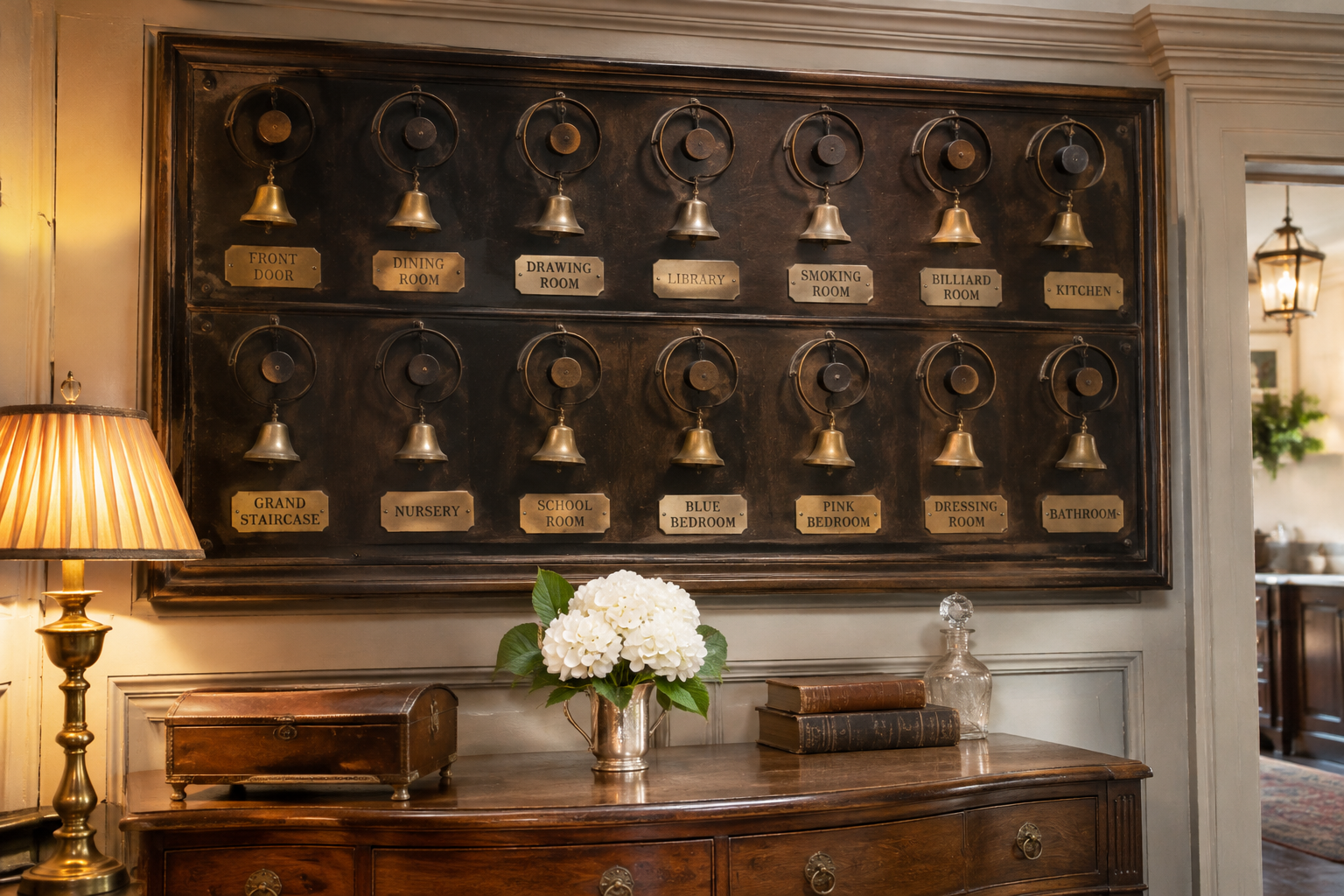
A pull cord or mechanical bell mechanism could connect a room to a bell board elsewhere in the house, often in a service area.
When someone rang, the system could indicate which room required attention.
Picture a row of little bells, each connected to a different part of a grand estate.
The drawing room needs tea.
The dining room needs assistance.
Someone upstairs needs something.
And somewhere, a very busy member of the household staff is wondering whether anyone in this house can do anything for themselves.
Today, we admire these systems as fascinating pieces of domestic history.
But they also tell us something important about the enormous amount of labor required to maintain the lifestyle portrayed in those beautiful old rooms.
Behind every elegant dinner party was an extraordinary amount of work.
05 | The House Was Watching the Front Door
Now, this one is particularly interesting.
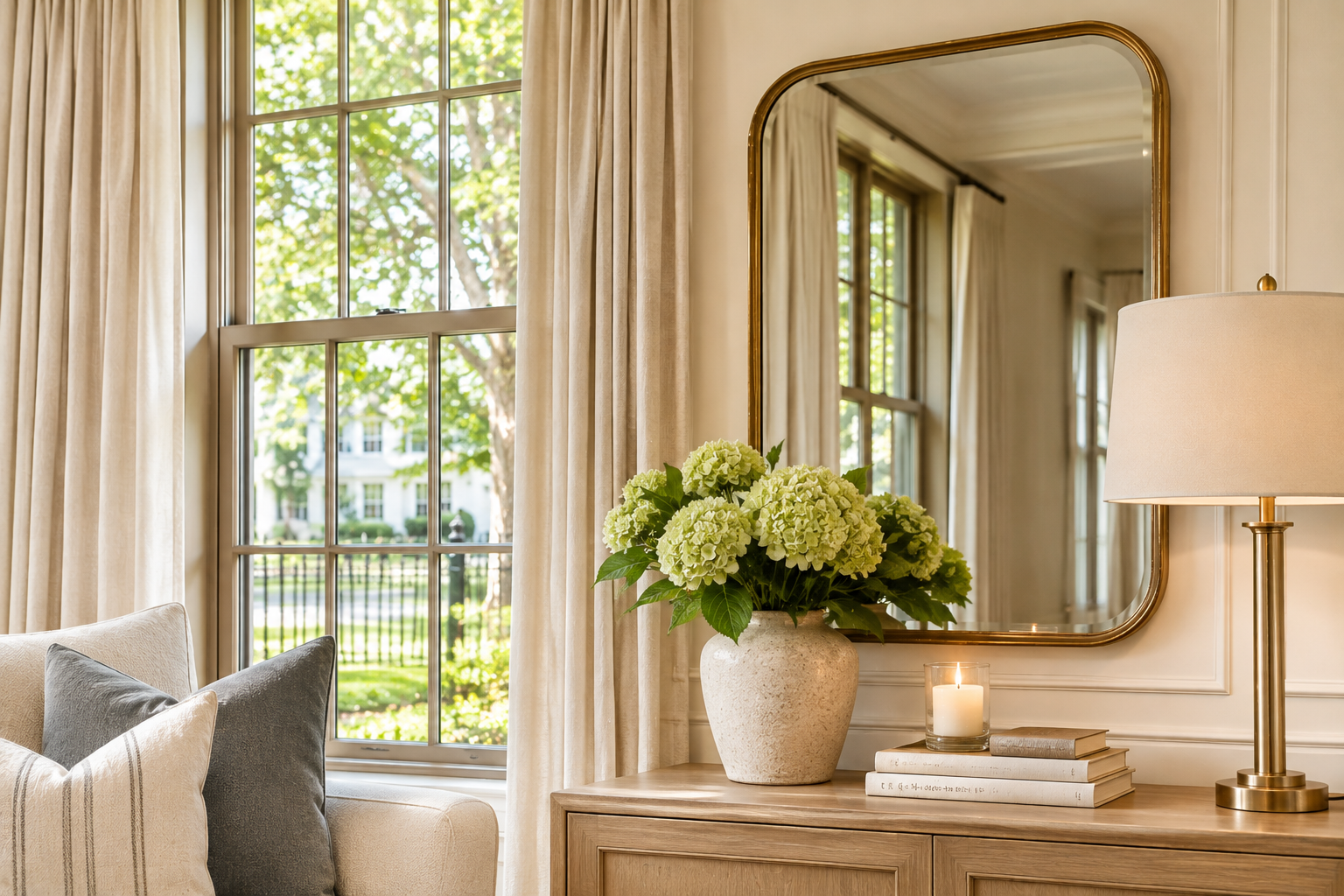
In some historic homes, especially in certain nineteenth-century urban houses, you'll find mirrors positioned near windows or angled to provide a view of the street or front entrance.
These are sometimes described as gossip mirrors.
They allowed occupants to see who might be approaching without necessarily standing directly in the window.
A practical little feature?
Absolutely.
An opportunity to observe the neighborhood without making your presence obvious?
Also absolutely.
Apparently, curiosity didn't begin with social media.
It simply had better brass hardware.
Not every unusual mirror had this purpose, of course. But the surviving examples are delightful reminders that human nature hasn't changed nearly as much as our technology has.
We have doorbell cameras.
They had mirrors.
Same curiosity. Different century.
06 | The Rooms That Changed With the Seasons
One of my favorite things about studying historic homes is discovering how differently people once used their rooms.
Today, we tend to assign a fixed purpose to every space.
The dining room is the dining room.
The living room is the living room.
The guest bedroom waits patiently for guests.
But historically, the way a room was used could change with the season, the time of day, and the needs of the household.
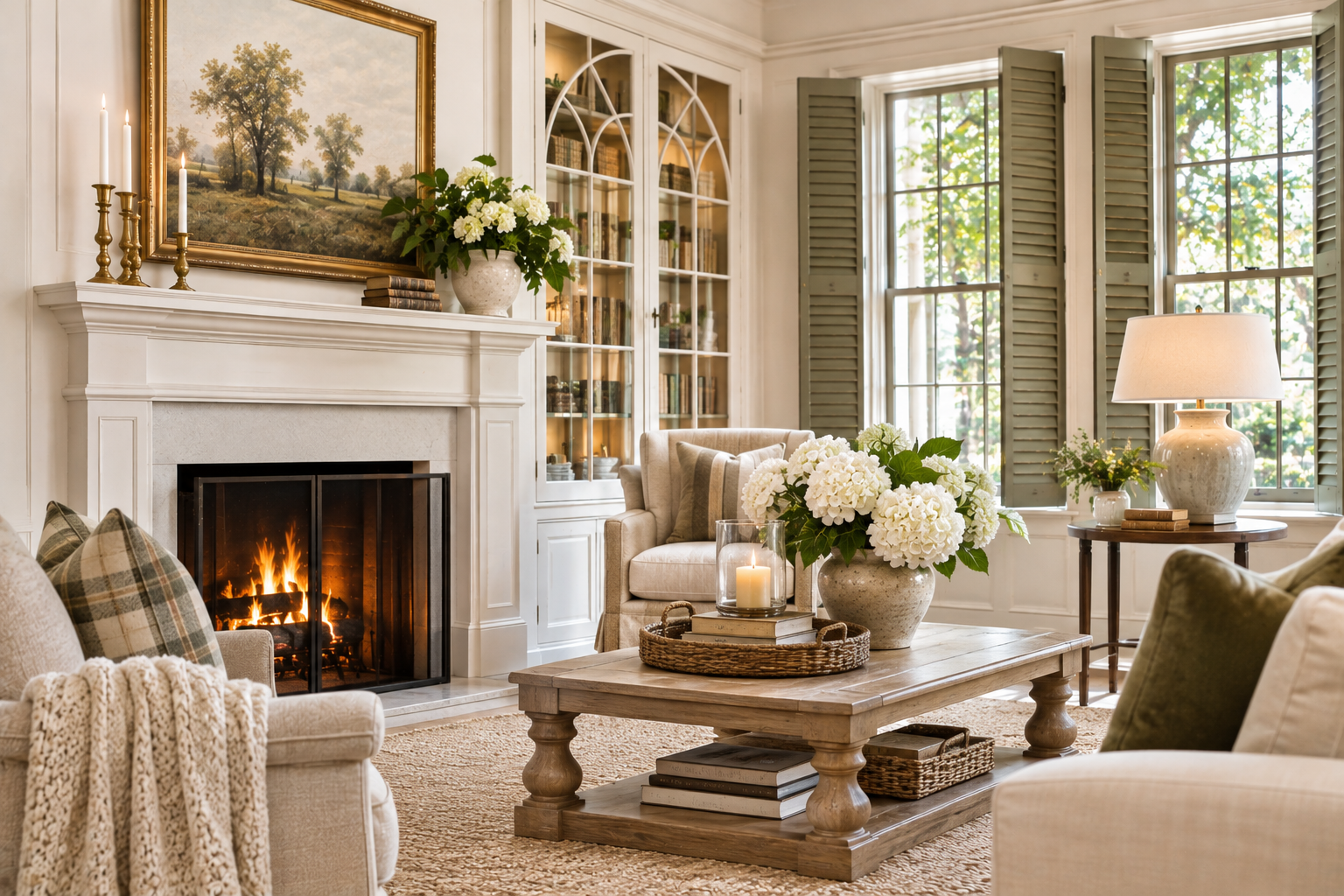
Families might gather near a fireplace during colder months and favor breezier, shaded rooms during the summer.
Furniture could be rearranged. Textiles changed. Shutters opened or closed to manage light and heat.
The house was not simply decorated.
It was lived in, adjusted, and adapted.
And perhaps that's one of the loveliest lessons old houses have to teach us.
A beautiful home doesn't have to remain perfectly arranged.
It needs to serve the people living inside it.
The Part of History I Love Most
When we admire a historic home today, it's easy to focus on the beautiful things.
The grand staircases.
The original millwork.
The aged brass.
The windows that have watched generations come and go.
And believe me, I could spend an entire afternoon discussing any one of those details.
But what fascinates me most is the everyday life that happened around them.
Someone once hurried down that narrow staircase carrying a tray.
Someone opened those tall windows hoping for a breeze.
Someone pulled a bell cord because company had arrived.
And someone, somewhere, was absolutely peeking through a cleverly positioned mirror to see who was coming up the walkway.
These weren't museums when they were built.
They were homes.
Full of routines, personalities, frustrations, celebrations, and people simply trying to make everyday life a little easier.
Maybe that's why I love old houses so much.
Not because they were perfect.
But because they remind us that home has always been about the same things.
Comfort. Family. Curiosity. Beauty.
And occasionally, knowing who's knocking before you answer the door.
Until next time, keep your eyes open. The most interesting part of an old house might be the detail everyone else walks right past.
May your home always be a place where stories are gathered, seasons are celebrated and the porch light is left on a little longer.
Melissa LaRosa
The Lantern & Oak Journal
Stories of Home. Timeless Living.